Policy S/PRIA: Public Realm Improvement Areas (PRIA) in Cambridge
1. Development within designated Public Realm Improvement Areas (PRIA) should be of the highest quality design and incorporate the principles of sustainable design and construction. Excluding very minor development, development proposals within PRIAs will be supported, if they:
a. Promote and coordinate the use of sustainable transport modes;
b. Contribute to the creation of a sense of place, including coordinated public realm improvements to create or reinforce the area's identity; and
c. Help sustain or deliver facilities and amenities appropriate to function and character of the area, including shops and services, as well as improving the appearance of existing shop fronts.
2. Development proposals should embrace a range of mixed uses and multiple functions where applicable, and take account of any relevant public realm and/or transport improvement strategies.
3. Where proposals provide opportunities and potential challenges, site promoters should develop a policy framework, approved by the Local Planning Authority, to promote and guide overall change during the life of the Plan for the relevant area.
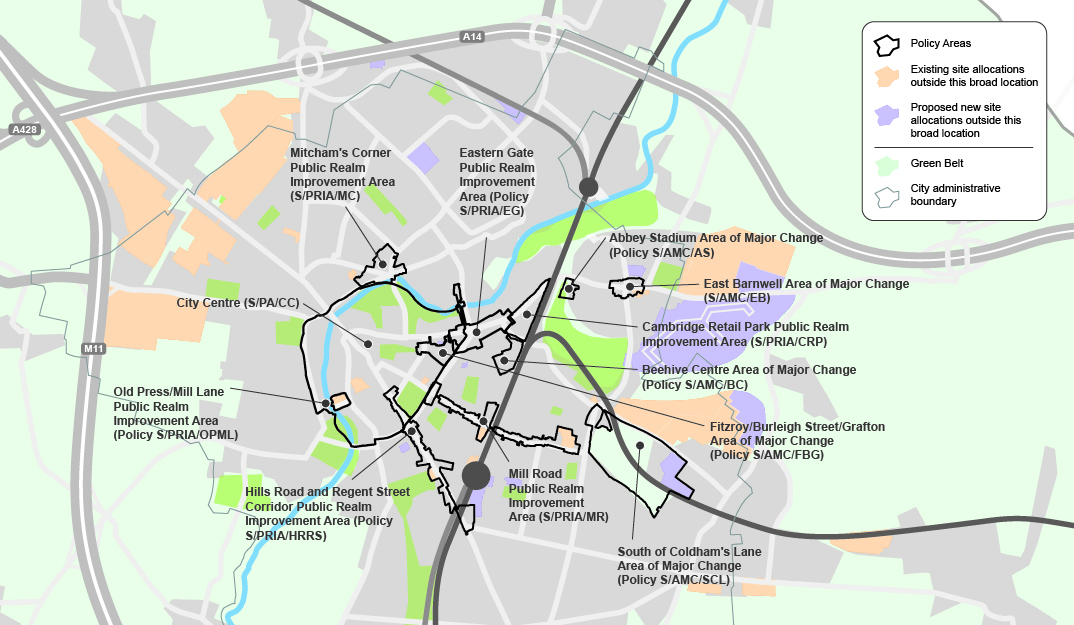
Figure 45: Map of Public Realm Improvement Areas (PRIA) in Cambridge in the Cambridge urban area
Supporting information
3.1.121. The policy approach includes additional considerations to those over-arching requirements set out in Policy S/AMC: Areas of Major Change. These additional considerations will ensure that development within a PRIA takes account of the area’s existing urban character, historic environment (where relevant), local shops and services and seek to support and improve these, reinforcing the area’s sense of place. Improved connectivity with surrounding areas is also a key objective of the policy, in a coordinated and sustainable manner.
3.2.122. It is recognised that while development can improve an area’s attractiveness it can also challenge the area’s character, in such circumstances site promoters are encouraged to develop a policy framework to guide the area’s reconfiguration
3.2.123. Site specific policies requirements are also included, to highlight key local characteristics along with short and long-term opportunities and area aspirations that development should take account of as part of any planning application.
Tell us what you think
For further guidance on how to submit comments, please see the Representation Guidance Note.
All comments must be received by 25 September 2026 at 5pm.