Development Strategy
2.28. This policy sets out the proposed strategy for the pattern, scale and design quality of places created in Greater Cambridge, for the plan period to 2045 and beyond. It sets out where the homes and jobs identified in S/JH: New Jobs and Homes should be provided to meet the vision and strategic priorities of the Local Plan.
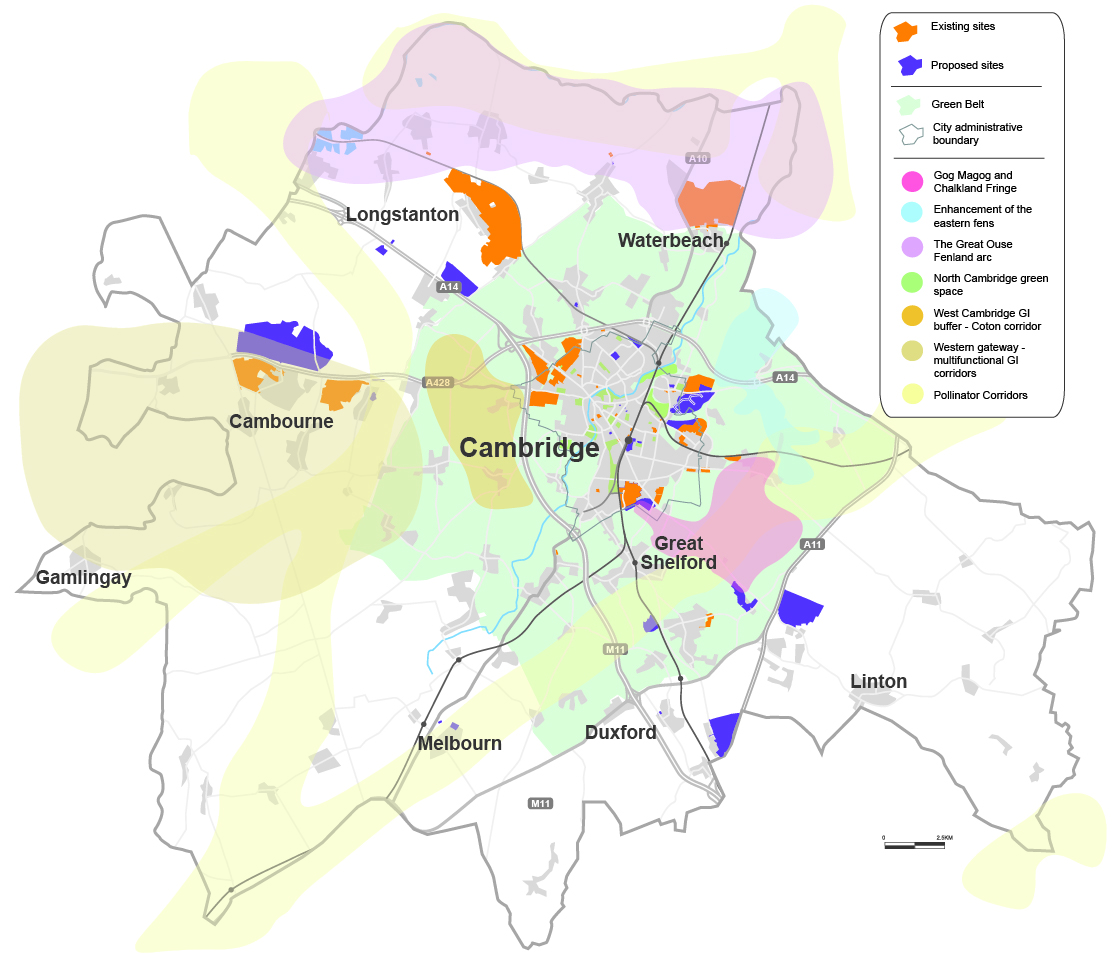
Figure 5: Map showing proposed Development Strategy for Greater Cambridge
Policy S/DS: Development Strategy
1. The need for jobs and homes will be met as far as possible in the following order of preference,
having regard to the purposes of the Cambridge Green Belt:
a. Within the Cambridge urban area;
b. On the edge of Cambridge;
c. At an expanded Cambourne;
d. At other new settlements; and
e. In the rural southern cluster and wider rural area at Rural Centres and Minor Rural Centres
2. The following strategic scale allocations are proposed to meet the majority of the development needs to 2045 and beyond (set out in Figure 4):
a. Within Cambridge urban area:
i. North East Cambridge – a special policy area to enable the redevelopment and intensification of strategic brownfield land to provide a thriving, well-connected, mixed use innovation district that will contribute to meeting Cambridge’s needs for office, research & development, and industrial uses, as well as new homes in appropriate parts of the site (including approximately 520 homes within the plan period) recognising that Cambridge Waste Water Treatment Plant is likely to remain on site;
ii. South of Coldham’s Lane – a special policy area and an allocation, enabling regeneration of this area to deliver a new urban country park and recreational ecological enhancement and approximately 86,000 square metres employment floorspace for office and research & development;
b. On the edge of Cambridge:
i. Cambridge East – a vibrant, inclusive well-connected new city district, reshaping eastern Cambridge while complementing the city centre, comprising: an allocation at Cambridge Airport for mixed use development with supporting services and facilities, including approximately 8,000 homes (delivering 3,950 homes within the plan period) and significant employment floorspace for office and research & development, and a minimum of 20,000 square metres employment floorspace for industrial uses, and allocations for Marleigh and Springstead village that are largely permitted and are building out (collectively delivering 2,492 homes within the plan period), to be fully integrated within the wider Cambridge East site;
ii. Cambridge Biomedical Campus – maintaining and enhancing the role of this world leading health, education and life-science quarter, an allocation for mixed use development including approximately 520,000 square metres employment floorspace for office and research & development, and 1,000 homes for local workers (all to be delivered within the plan period), to enable delivery of a world leading campus providing medical facilities, research and health science;
iii. Eddington – a major new neighbourhood in North West Cambridge, led by the University of Cambridge: an allocation with additional capacity for homes within the existing permitted site built area, for mixed use development with supporting services and facilities, including approximately 5,500 homes (delivering 4,418 homes within the plan period), 2,000 units of student accommodation (delivering 1,675 units within the plan period), and floorspace for research, office, research & development and mid-tech;
iv. West Cambridge – an enhanced major academic and commercial hub for Cambridge University: an allocation for approximately 383,000 square metres employment floorspace for office and research & development, and academic floorspace;
v. Land between Huntingdon Road and Histon Road – a new community on the edge of Cambridge with approximately 2,700 new homes (delivering 2,242 homes in the plan period) supported by services and facilities, that has outline planning permission for the whole development and reserved matters consents for parts and is currently building out.
c. At new settlements:
i. An expanded Cambourne, which will capitalise on new sustainable transport connections to evolve into a sustainable, thriving and prosperous town, rooted in nature. This will incorporate:
1. Cambourne North – an allocation for mixed use development, anchored around a new gateway town centre at the East West Rail station and fully integrated with the existing town: including approximately 13,000 homes (delivering 2,550 homes within the plan period), 108,000 square metres employment floorspace for office, research & development, and industrial uses and various supporting services and facilities, including a cultural hub and performance space, new leisure hub and northern forest;
2. Cambourne – an allocation to steer the continual expansion and renewal of the existing town in line with the wider vision for Cambourne, including 2,720 homes (delivering 2,170 homes within the plan period) and 34,600 square metres of employment floorspace, focused at West Cambourne, Cambourne Business Park and Cambourne Town Centre;
ii. Land adjacent to A11 and A1307 at Grange Farm – a mixed use new settlement designed for sustainable living and working, sensitively integrated with its natural and cultural landscape and well connected to Greater Cambridge’s dynamic life sciences research campuses: comprising approximately 4,500 homes (delivering 2,550 homes within the plan period), 15,000 square metres employment floorspace for office uses and 20,000 square metres for industrial uses, and a new centre with a mixture of facilities and services;
iii. Northstowe New Town– a mixed use development of a new town with supporting services and facilities that has outline planning permission for the whole development and reserved matters consents for parts and is currently building out, including approximately 10,180 homes (delivering 6,382 homes within the plan period) and 47,000 square metres employment floorspace for office and research & development, delivering a sustainable new town with a distinctive local identity, drawing on the traditions of fen-edge market towns and the high quality and innovation that are characteristic of Greater Cambridge;
iv. Waterbeach New Town – an allocation for mixed use development with supporting services and facilities that has outline planning permission for the whole development and reserved matters consents for parts and is currently building out, including approximately 11,000 homes (delivering 5,721 homes within the plan period) and 39,800 square metres employment floorspace for office, research & development, and industrial uses delivering a vibrant community of a high quality and distinctive design, celebrating excellence in sustainable development and healthy living, with its own character and identity that respects its location on the Fen edge, its historic landscape and close proximity to Cambridge.
v. Bourn Airfield new village – an allocation for a new well connected mixed use rural centre that has outline permission, including 3,500 homes (all to be delivered within the plan period), up to 1,400 square metres of employment floorspace for office, research and development or industrial processes and various supporting services and facilities, anchored around a vibrant village centre, integrated with and enhancing its landscape setting;
d. In the Rural Southern Cluster:
i. Wellcome Genome Campus – an allocation for a mixed use expansion of this internationally significant life sciences campus, together with a policy area supporting the renewal of the existing site, to create an exceptional, stimulating environment for integrated working and living, the expansion land has outline planning permission for the whole development and reserved matters consents for parts and is currently building out: including approximately 127,500 square metres employment floorspace for office and research and development, 1,500 homes for campus workers (all to be delivered within the plan period) and a range of supporting services and facilities, focused on a series of well-connected mixed use development clusters within a landscape-led master-planned campus setting;
ii. Babraham Research Campus – an employment-led mixed use allocation to support further growth of this existing world leading bioscience research and innovation campus and improve the health and wellbeing of future employees, residents and the local community through targeted environmental enhancements: including approximately 48,000 square metres employment floorspace for office and research & development and 43 additional homes (all to be delivered within the plan period), supported by focused additional facilities that complement existing local services;
e. In the rest of the Rural Area:
i. Slate Hall Farm, Junction 25, A14 – an allocation for master-planned employment-led development that responds sensitively to the local landscape and secures access to new green infrastructure for future workers and the local community: including approximately 220,000 square metres employment floorspace for industrial and warehousing uses, with a mix of small-medium units to support the growth of a wide range of different businesses;
ii. Land to the south of the A14 Services – an allocation for approximately 90,000 square metres employment floorspace for industrial, warehousing and lorry parking to support the future space needs of Greater Cambridge’s businesses and deliver a range of new employment opportunities.
3. The remainder of the development needs will be met at smaller sites within:
a. Cambridge urban area, including allocations for jobs and homes, and the settlement hierarchy policy providing support for windfall development; and
b. The rural area, where further development will be limited, with allocations for jobs and housing focused on Rural Centres and Minor Rural Centres, and the settlement hierarchy policy providing for windfall development for different categories of village consistent with the level of local service provision and quality of public transport access to Cambridge or a market town.
Development needs & supply
4. Committed supply and new sites identified in this plan to meet the identified housing needs established in Policy S/JH: New jobs and homes are set out in Tables 1-3 below. Delivery across the plan period is set out in the housing trajectory included in Appendix D: Housing trajectory and five year housing land supply calculation. The five year housing land supply for Greater Cambridge will be calculated using the Liverpool methodology.
Accommodation for Gypsies, Travellers and Travelling Showpeople
5. Sites for Gypsies and Travellers or yards for Travelling Showpeople that already have, or in future are granted, an unrestricted planning permission for that use are safeguarded for that use. Planning permission for alternative uses on these sites or yards will not be permitted.
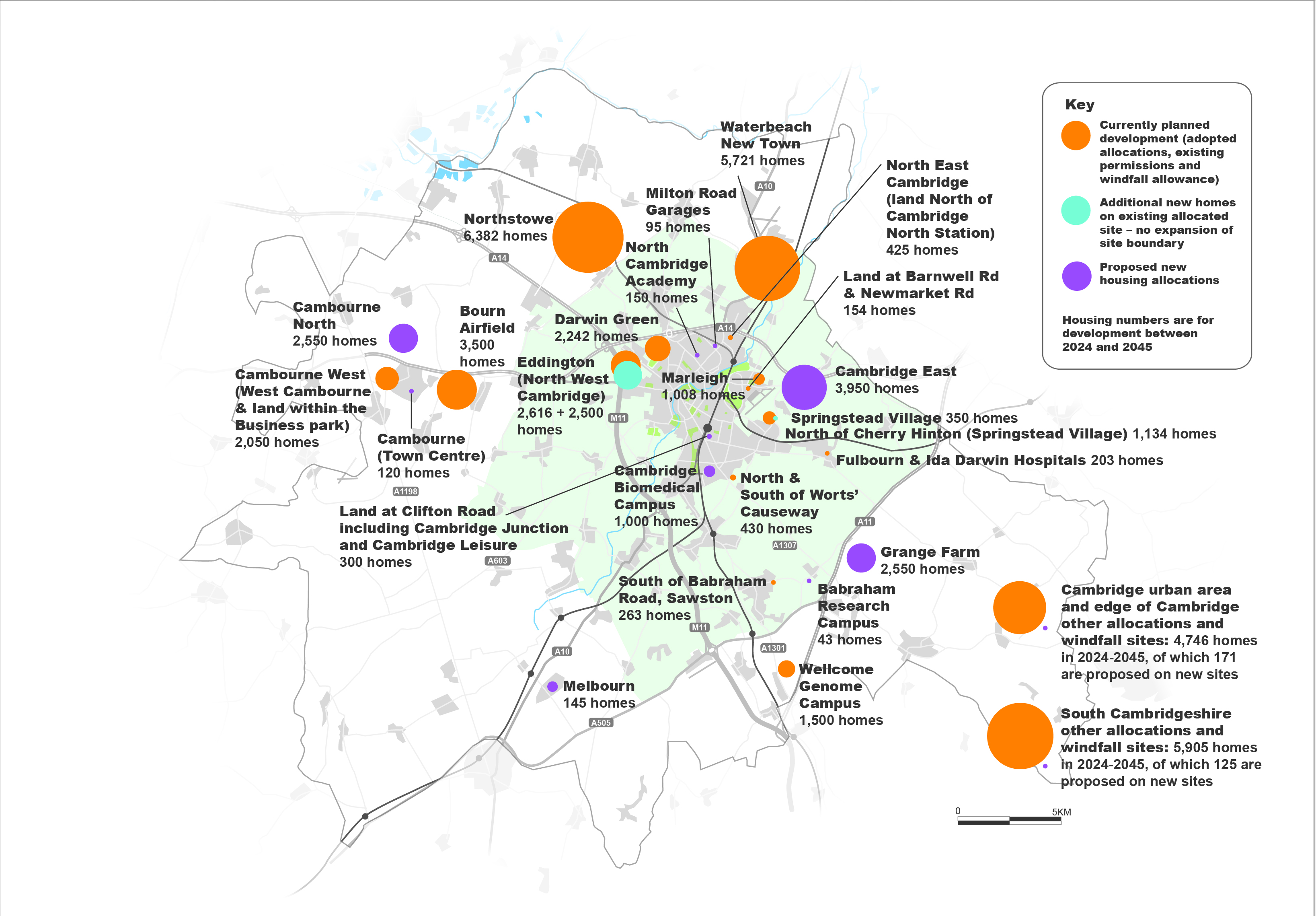
Figure 6: Illustrative map showing locations of proposed new housing development from 2024 to 2045
Supporting information
Summary of development provided in allocations
Homes to provide for | Homes 2024-2045 |
Housing need | 48,069 |
Current supply (including communal accommodation for students or older people) comprising: adopted allocations, sites with planning permission or a resolution to grant planning permission, and windfall allowance | 38,378 |
Total additional homes to be identified to meet need | 9,691 |
Table 1: Calculating the number of additional homes to meet the housing needs established in Policy S/JH: New jobs and homes
Location | Policy reference / Site name | Homes 2024- 2045 | Homes Post 2045 |
Cambridge urban area | S/C/SMS Garages at St. Matthews Street and Norfolk Street, Cambridge | 12 | 0 |
Cambridge urban area | S/C/NCA North Cambridge Academy, 108 Arbury Road,Cambridge | 150 | 0 |
Cambridge urban area | S/C/ER 1-99 Ekin Road and 1-8 Ekin Walk, Cambridge | 26 | 0 |
Cambridge urban area | S/C/DR 2-28 Davy Road and garage blocks, Cambridge | 26 | 0 |
Cambridge urban area | S/C/HPC 1-78 Hanover Court, 1-49 Princess Courtand garage at Newtown garages, Cambridge | 38 | 0 |
Cambridge urban area | S/C/GER Former Garage Block, East Road, Cambridge | 40 | 0 |
Cambridge urban area | S/C/SH 1-33 Stanton House, Christchurch Street, Cambridge | 29 | 0 |
Edge of Cambridge | S/CE Cambridge East (safeguarded land) | 3,950 | 4,050 |
Edge of Cambridge | S/CE Cambridge East (additional new homes at Springstead Village – no expansion of site boundary) | 350 | 0 |
Edge of Cambridge | S/ED Eddington (additional new homes on existing allocated site – no expansion of site boundary) | 2,500 | 0 |
Edge of Cambridge | S/CBC Cambridge Biomedical Campus | 1,000 | 0 |
New settlements | S/CBN Cambourne North | 2,550 | 10,450 |
New settlements | S/CB Cambourne (Town Centre) | 120 | 0 |
New settlements | S/GF Land adjacent to A11 and A1307 at Grange Farm | 2,550 | 1,950 |
Rural Southern Cluster | S/RSC/BRC Babraham Research Campus | 43 | 0 |
Rural Southern Cluster | S/RSC/MF Land at Maarnford Farm, Hunts Road, Duxford | 60 | 0 |
Rest of the rural area | S/RRA/ML The Moor, Moor Lane, Melbourn | 20 | 0 |
Rest of the rural area | S/RRA/H Land at Highfields (phase 2), Caldecote | 65 | 0 |
Rest of the rural area | S/RRA/CR Land to the west of Cambridge Road, Melbourn | 125 | 0 |
All locations | Total supply | 13,654 | 16,450 |
Table 2: New sites to meet the identified housing need
Homes to be delivered | Homes 2024-2045 |
Current supply | 38,378 |
New sites | 13,654 |
Total supply (from current supply and new sites) | 52,032 |
Headroom provided by total supply in relation to housing need | 8.2% |
Table 3: Total housing supply to meet the identified housing need for 2024-2045
Meeting our needs
Confirming the amount of new employment space and number of new homes to plan for
2.29. Policy S/JH New Jobs and Homes identifies the needs over the plan period. It is then for the Councils to decide how to meet those needs and the amount of development to plan for.
2.30. National planning policy requires us to ensure our plan is positively prepared and meets our identified needs. For homes this includes meeting the government’s Five-Year Housing Land Supply requirement throughout the plan period and also the Housing Delivery Test, which in turn look ahead at ensuring adequate future supply and backwards at past delivery. This is important as if we fail either of those tests at any point in the future, the Councils would have less control over development that comes forward in planning applications for sites that are not consistent with our plan.
2.31. For jobs, the Employment and Housing Evidence Update 2025 (EHNU 2025), and confirmed as robust by the Review of economic data in 2026, identified that under the most likely central scenario for jobs growth, 73,300 jobs are anticipated over the plan period. Of this total, around 35,000 of those would be office, R&D and industrial jobs. The EHNU converted these jobs into employment floorspace needs of almost 1,220,000 square metres. The rest of the jobs forecast are in services and support uses such as shops, schools and healthcare.
2.32. The EHNU 2025 recommends that to ensure a flexible employment land supply for office, R&D and industrial jobs, and encouraging growth in existing businesses and attracting inward investment, we therefore plan for a greater amount of employment floorspace than that associated with our identified need, taking into account the needs of different employment sectors.
Identifying how much land for new jobs and homes needs to be found
2.33. Our adopted Local Plans from 2018 have given us a strong platform to build on by planning for a number of large sites for development on the edge of Cambridge and at major developments like Northstowe and the new town north of Waterbeach, that will continue to build out for many years to come, including in some cases beyond the new plan period, mean that a large proportion of the development we need to plan for has already been identified.
2.34. For jobs, we have a considerable amount of employment land already identified, with over 1,000,000 square metres of employment floorspace in our supply. This includes some large employment sites, such as the Wellcome Genome Campus, that are expected to continue to build out well beyond the new plan period as well. Holding a large overall employment land supply has been a characteristic of Greater Cambridge over many years, even with the fast rate of growth in some of the key sectors in the Greater Cambridge area seen in recent years.
2.35. Our employment evidence identifies that notwithstanding the overall level of employment land supply, there is a need for suitable new land to be identified to meet the employment needs of specific sectors, some of which have very specific locational requirements.
2.36. For homes, we already have an existing supply of just over 31,715 homes from actual completions in 2024/25, and allocations in our adopted Local Plans and sites with planning permission (or with a resolution to grant planning permission) set to be delivered by 2045. This includes new homes and residential accommodation anticipated to be provided in the form of rooms for students or older people. On top of this, we have identified an allowance for windfall sites for residential development coming through planning applications.
2.37. The Councils’ evidence for this windfall allowance is set out in the Greater Cambridge Housing Delivery Study Addendum Update (2026). This is based on in-depth analysis of historic housing completions on windfall sites and consideration of future trends taking account of national legislation, and national and local planning policy, which all continue to support the delivery of housing on windfall sites. For Greater Cambridge as a whole, we expect about 6,660 homes to be built during the plan period from this source.
2.38. Subtracting our existing supply from our housing need of 48,069 results in a residual balance of around 9,690 homes to find through new allocations between 2024 and 2045. In order to give greater confidence in meeting our needs, to be able to respond to changing circumstances if they arise and in line with good practice, our existing supply and proposed allocations provide additional headroom above those needs.
2.39. The housing trajectory for Greater Cambridge, included in Appendix D: Housing trajectory and five year housing land supply calculation, demonstrates how the objectively assessed need for Greater Cambridge of 48,069 homes for 2024 to 2045 will be met. The same appendix also sets out the five year housing land supply calculation for Greater Cambridge for 2028-2033, on the basis of this being the anticipated five year supply period at adoption.
2.40. In recent years, actual annual completions in Greater Cambridge have been around the level of the combined adopted annual housing requirement for Greater Cambridge, and at March 2026 there were just over 34,400 homes with planning permission anticipated to build out throughout the plan period and beyond. However, the annual housing requirement (based on the standard method) included in this plan is 37% higher than the combined adopted annual housing requirement for Greater Cambridge. A sustained increased level of annual completions at or above the annual housing requirement is not anticipated until the second half of the plan period due to the sustainable development strategy set out in this plan and the infrastructure constraints relating to water and transport (for which improvements are not anticipated to be delivered until later in the plan period). Under these circumstances, it is appropriate for the five year housing land supply for Greater Cambridge to be calculated using the Liverpool methodology.
Small sites requirement
2.41. To support delivery of small and medium sized sites, national planning policy requires land to be identified to accommodate at least 10% of the overall housing requirement on sites no larger than one hectare, unless it can be shown that there are strong reasons why this 10% target cannot be achieved. For Greater Cambridge, this means identifying sufficient land to accommodate 4,807 homes on sites of up to one hectare. Our completions in 2024/25, existing commitments, proposed new allocations and the windfall allowance are anticipated to deliver 7,005 dwellings, which is in excess of 10% of our housing requirement. Of these, 2,052 homes are on specific identified sites, comprising approximately 4.3% of the 48,069 homes that is our housing requirement.
2.42. This is the appropriate response to this requirement for Greater Cambridge, as allocating the full amount on specific identified sites would need us to identify large numbers of small sites across the rural area. Not only would this be extremely challenging, it would compromise our development strategy by directing a significant portion of growth to less sustainable locations where levels of car use would be higher, negatively impacting our response to the challenges of net zero carbon and Climate Act obligations and undermining our vision and strategic priorities. It may also necessitate more sites being released from the Green Belt as most of the larger and better served villages are located within the Green Belt, conflicting with our aim to protect the Cambridge Green Belt.
2.43. It would also be difficult to deliver the infrastructure needed to make the developments sustainable. As such, it is considered that completion in 2024/25, existing commitments, proposed new allocations and the windfall allowance have a good prospect of meeting the overall aim of this aspect of national planning policy, and would not generate the negative consequences of identifying specific allocations for 10% of our housing requirement on small sites.
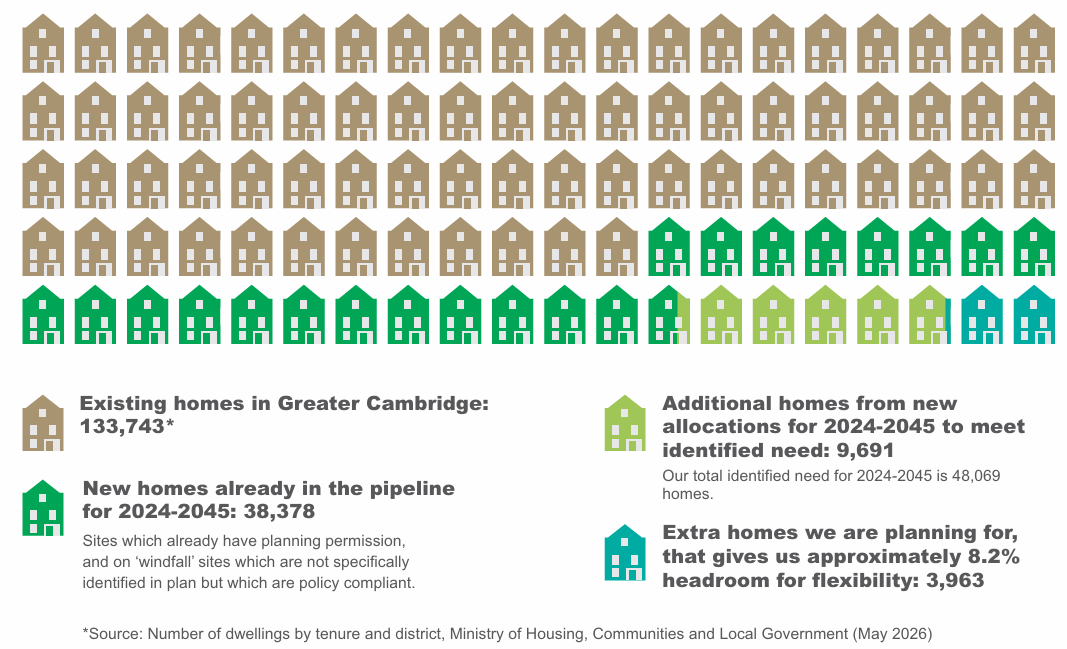
Figure 7: Infographic showing the number of new homes we propose to plan for
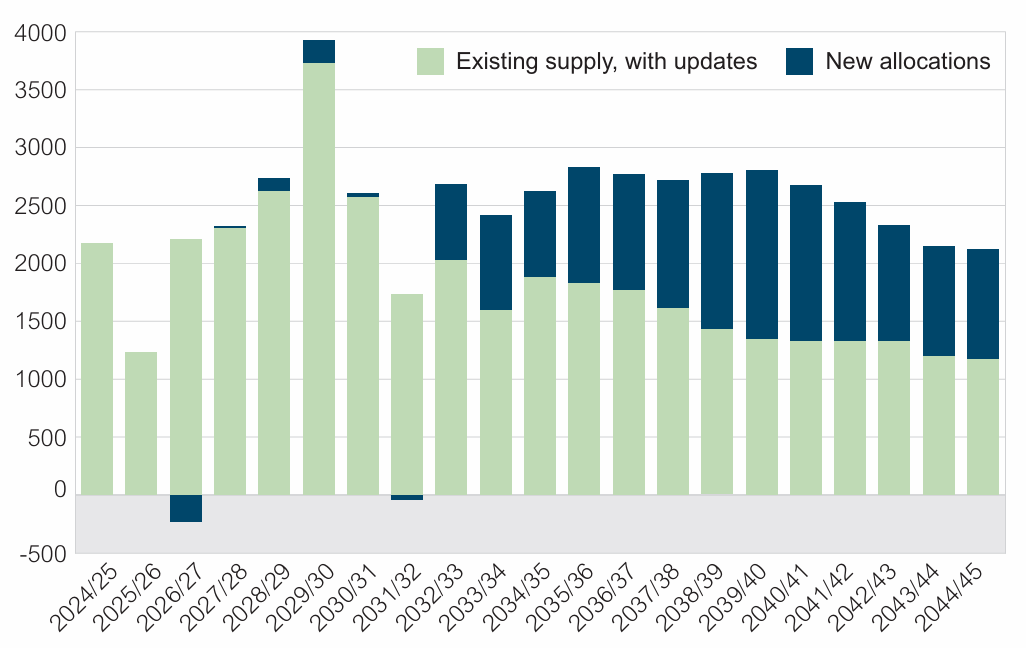
Figure 8: Graph showing proposed housing trajectory, 2025-2045
Spatial strategy
Overview
2.44. National planning policy states that plans should set out “an appropriate strategy, taking into
account the reasonable alternatives, and based on proportionate evidence”.
2.45. The adopted Local Plans (2018) for Cambridge and South Cambridgeshire are separate, but together they implement a single joined up strategy for Greater Cambridge which includes:
- Allocations within Cambridge where there was capacity,
- Carrying forward existing edge of Cambridge allocations, identifying limited additional development on the edge of Cambridge where this would not cause significant harm to Green Belt purposes, and safeguarding land for development at Cambridge Airport,
- New Settlements at North of Waterbeach and at Bourn airfield, alongside carrying forward the existing allocation at Northstowe,
- Extension of Cambourne at Cambourne West, and
- Limited village allocations at Rural Centres and Minor Rural Centres
2.46. Delivery of this strategy is progressing well, with development underway or completed including at the edge of Cambridge sites such as Eddington, Darwin Green, Marleigh and Springstead village, at the new settlement sites of Northstowe, Waterbeach New Town (West), and Cambourne West, and on smaller allocations within Cambridge and the villages. Additionally, outline permission has been granted for Bourn Airfield New Village and Waterbeach New Town (East).
2.47. Throughout the preparation of the development strategy, at each stage of plan-making we have drawn on our evidence together with consultation feedback to inform our approach.
2.48. In considering the strategy choices available for the new Greater Cambridge Local Plan to meet our needs for mixed use development, we explored the sustainability merits of locating new development within each of the five sources of supply from the adopted development strategy:
- Cambridge Urban Area;
- Edge of Cambridge, both non-Green Belt and Green Belt;
- New settlements outside of the Green Belt; and
- Villages.
2.49. We made sure to consider the sustainability impacts of focusing growth outside the Green Belt in comparison with alternatives of releasing Green Belt land, as we are required to do by national planning policy.
2.50. We also identified six development strategy choices which form geographically focused hybrids of the previously identified sources of supply, comprising:
- Public Transport Corridors;
- Providing homes close to jobs in the research parks to the south of Cambridge (described as the Rural Southern Cluster);
- Integrating development with planned infrastructure in the corridor to the west of
Cambridge; - A hybrid involving an additional new settlement;
- A hybrid involving release of land from the Green Belt; and
- A hybrid involving expanding Royston – an existing market town.
2.51. We reviewed the sustainability merits, opportunities and constraints for each of these eleven potential strategy choices, considering evidence under each of our themes, as well as completing Sustainability Appraisal of them.
2.52. Alongside considering locations for new homes and jobs, we also considered suitable locations to restore our area’s habitat networks and provide more green spaces for people providing health and wellbeing benefits. Our Green Infrastructure evidence identified 14 strategic green infrastructure initiatives to help achieve this. We prepared our preferred development strategy including draft allocations and green infrastructure initiatives in parallel. Within the plan, relevant sites policies, and our Biodiversity and Green Spaces policies, require development to support the delivery of these strategic initiatives. Our Infrastructure Delivery Plan also identifies a number of specific projects that will contribute to meeting the objectives of the initiatives.
2.53. Drawing on our evidence and consultation feedback, our preferred option is a blended strategy to meet a variety of needs which responds to the opportunities provided by different sources of supply. It is informed by the vision and strategic priorities, as well as the development strategy principles as follows:
a. Limit our climate impact and support thriving communities – locate development where active and public transport is the natural choice, with jobs, services and facilities located near to where people live, and responding to opportunities created by existing and proposed major new transport infrastructure;
b. Protect and enhance our natural environment – maximise opportunities to use brownfield land, and ensure green infrastructure can be delivered alongside new development;
c. Enable our national and global economic employment sectors to flourish – provide
employment space of the right type in the right location to meet sector needs;
d. Reinforce the distinctive character of our city, towns and villages – protect the Green Belt, and develop sites that can be well-integrated with existing communities, can be developed at densities, and using appropriate forms and patterns of development, which make best use of land while creating well-designed, characterful places; and
e. Support all necessary utilities in a sustainable way – ensure that the development strategy can be supported by utilities in a way that protects and enhances the environment.
Broad areas of supply
2.54. In identifying new allocations for development we drew on our development strategy principles alongside considering site specific opportunities and constraints. Through this process we first identified development opportunities on previously developed land, particularly within and on the edge of Cambridge but also at previously planned new settlements. However, given the scale of our development needs, we needed to also consider options on greenfield land too.
2.55. For each site we considered the opportunity to apply densities making best use of land whilst being sensitive to local context. Among other constraints, we accounted for flood-risk – seeking to locate development in areas at lowest risk of flooding first – applying the sequential approach required in national policy.
Cambridge urban area
2.56. Our evidence and Sustainability Appraisal confirm that the urban area of Cambridge remains a highly sustainable broad location for additional homes and jobs, relating to its accessibility to existing jobs and services. It also provides the most significant opportunities for reusing previously developed land and optimising densities in these well connected locations. A number of existing allocations are proposed for retention in this broad area.
2.57. During the course of developing this local plan proposals for comprehensive development of the Nort East Cambridge area were identified, reflecting the opportunities provided by the Cambridge Waste Water Treatment Plant (CWWTP) planned relocation off site. In August 2025 the Government announced that it would no longer be funding the relocation through its Housing Infrastructure Fund, which means that there is uncertainty as to whether the delivery of the Councils’ preferred vision for North East Cambridge can be realised in full.
2.58. A special policy area for North East Cambridge has been identified to support delivery of office, research & development, and industrial uses, as well as new homes in appropriate parts of the site recognizing that CWWTP is likely to remain on site. The Councils would seek to deliver the previous preferred vision for mixed use comprehensive redevelopment, should funding again become available to fund the relocation of the CWWTP, noting the significant benefits that development at this site would bring. Funding may be found to enable the relocation of the CWWTP. Ahead of the Proposed Submission stage in 2026, the Councils will continue to engage with relevant partners to confirm a refined position for that later plan-making stage.
2.59. In addition to North East Cambridge, considering its particular sustainability merits, the strategy seeks to maximise supply from all other sources in the Cambridge urban area. This includes optimising densities on other sites and identifying a number of smaller allocations that are opportunities for regeneration and estate renewal, drawing on engagement with the Cambridge Investment Partnership. Further to this, several new opportunity areas for regeneration have been identified alongside carrying forward those identified in the Cambridge Local Plan (2018) that have yet to come forward.
Edge of Cambridge
2.60. Our evidence shows that the edge of Cambridge could be a sustainable location for homes and jobs, being accessible to existing jobs and services, and if development is planned at sufficient scale this could also support new infrastructure. Several existing allocations on the edge of Cambridge continue to be built out. Beyond this, on the edge of Cambridge outside the Green Belt, Cambridge East provides the most significant development opportunity in this area, comprising land at Cambridge Airport that was originally identified for development in the 2003 Structure Plan and is safeguarded in the 2018 Local Plans for development should the site become available, which the landowner has now advised will be the case by 2029. There are also opportunities for additional homes to be provided within the identified development area at Eddington (North West Cambridge) and Cambridge East (Springstead Village).
2.61. Other potential sources of supply on existing Green Belt land on the edge of Cambridge were considered in developing the strategy, to make sure we fully considered this against other alternative approaches. The Government attaches great importance to Green Belts in national planning policy. Cambridge has had a Green Belt since the 1965 Development Plan, and Cambridge’s locally specific Green Belt purposes have been embedded in development plans over many years. In preparing the Greater Cambridge Local Plan we completed a Green Belt Assessment in 2021 to help us understand the impact development would have on Green Belt purposes.
2.62. Drawing on our evidence and consultation feedback, we do not consider that our general development needs provide the ‘exceptional circumstances’ required in national policy to justify removing land from the Green Belt in this Local Plan, including grey belt, having regard to the identification of other sources of land supply that can meet needs sustainably without the need for Green Belt release. Notwithstanding this we have updated our Green Belt study in accordance with the latest National Planning Policy Framework and Planning Practice Guidance to ensure it provides a robust, up-to-date assessments, including to identify grey belt land within Greater Cambridge.
2.63. Noting this conclusion regarding general development needs, we have assessed sites in the Green Belt individually to identify whether there could be any site specific exceptional circumstances that could justify amendments to Green Belt boundaries. Having completed this review for the edge of Cambridge, we consider that the only site where such exceptional circumstances exist is at Cambridge Biomedical Campus where a limited release is justified to provide an opportunity to meet development needs of the campus and deliver a world leading campus. Away from the edge of Cambridge, we also consider that site specific exceptional circumstances exist to justify limited releases at Babraham Research Campus to respond to its unique employment characteristics. At these sites, we are requiring compensatory improvements to remaining Green Belt land in line with national planning policies.
New settlements
2.64. Our existing new settlements at Northstowe and Waterbeach, together with Bourn Airfield New Village which has been granted planning permission, will continue to be built out through the new plan period to 2045 and beyond and form a significant part of our future supply. Drawing on our review of the different strategy options and our Sustainability Appraisal, the most sustainable location for additional strategic scale development away from Cambridge is expanding on existing development in the Cambourne area, taking advantage of the significant benefits that will be provided by the proposed East West Rail station as well the proposed public transport improvement to the Cambourne to Cambridge corridor. This significant improvement in public transport accessibility provides an opportunity to grow and enhance an existing new town, increasing the critical mass of population, employment and services available locally to those communities.
2.65. We also have evidence that locating homes close to existing and proposed jobs at the cluster of research parks to the south of Cambridge would help reduce commuting and associated carbon emissions and congestion. A new settlement at Grange Farm provides an opportunity to provide a significant number of new homes within cycling and walking distance of jobs at Granta Park and Babraham Research Campus, and connected via a proposed high quality public transport route to Cambridge Biomedical Campus.
2.66. We are also supporting further jobs and homes growth in this area by identifying allocations connected to employment, including for jobs at Babraham Research Campus, and jobs and tied homes confirming the existing planning permission at Wellcome Genome Campus, and through a number of housing allocations at well-connected villages in the area.
Villages
2.67. Our evidence shows that our villages should play only a limited role in meeting future development needs to support delivery of a range of smaller sites and support the vitality of our villages. Alongside including a number of housing sites with permission that are currently being delivered, we have identified a limited number of new sites for housing at our more sustainable villages.
Employment strategy
2.68. The Greater Cambridge economy is nationally and internationally important. The area is home to two Universities and one of the most significant clusters in Europe of high-tech industries, research and development and life sciences. It also has a range of other industries operating successfully in the area. After identifying overall needs we explored in greater depth the needs of sectors to help us understand how the plan can best support in terms of land supply but also the location and types of space that are needed.
2.69. Our economic strategy responds to the specific locational and space-type needs of different sectors, comprising several mixed use sites that include both homes and employment space, the expansion or redevelopment of existing employment sites, and major new industrial and distribution sites. There are also several new small and medium employment allocations identified within urban and rural areas:
- To support the continued flourishing of our internationally renowned knowledge intensive sectors that are identified as priority sectors within the Cambridgeshire and Peterborough Local Growth Plan, in particular life sciences and ICT, we propose:
- Significant additional space for continued growth in laboratory and office employment (Use Class E(g) at our existing cluster centres, including at North East Cambridge which incorporates Cambridge Science Park, West Cambridge, Wellcome Genome Campus, Melbourn Science Park;
- Release of land from the Green Belt at Cambridge Biomedical Campus and Babraham Research Campus to meet future needs at these important facilities;
- Further space at sustainable locations providing opportunity for the growth of new
clusters in the longer term, particularly at Cambridge East, but also at Cambourne; - Continued support for laboratory and office employment (Use Class E(g) at adopted allocations in sustainable locations within and on the edge of Cambridge, and at the emerging new settlements of Northstowe and Waterbeach; and
- Additional housing in locations that can be connected by sustainable means to cluster centres.
- To meet our emerging needs for mid-tech space (Use Classes E(g)/B2/B8), particularly where companies develop prototypes emerging from our knowledge intensive sectors, we propose allocations on the edge of the urban area, including at Eddington and Cambridge East, with longer term provision at an expanded Cambourne.
- To meet our immediate need for industrial floorspace and local needs for logistics floorspace (Use Classes B2/B8), we propose two substantial new allocations in the A14 corridor, with longer term provision at an expanded Cambourne. We also propose land at several of our mixed use allocations for general industrial space (Use Classes B2/B8).
2.70. In addition, a number of key existing employment and commercial sites are identified as Areas of Major Change, including Granta Park, the Imperial War Museum Duxford, the Grafton Centre, South of Coldham’s Lane and Cambridge Railway Station, Hills Road Corridor.
2.71. Many of the sites and policies outlined above are particularly suited to supporting the needs of clusters. However, cluster-related employment is not restricted to these areas, and there are smaller concentrations and individual firms both in Cambridge and the rural areas of South Cambridgeshire. Developments proposed to support clusters which meet the proposed policy requirements in Policy J/NE will be supported, particularly where they include provision of a range of suitable units, including for start-ups, SMEs, and incubator units.
Distribution of housing development 2024-2045
2.72. The following table sets out the broad distribution of housing growth under previous rounds of plan-making, alongside the preferred option strategy distribution. The proportions of housing development in different types of location have changed over time as the impacts of the sustainable development strategy across our current 2018 Local Plans, which was initiated in predecessor plans, starts to take effect. The large strategic sites on the edge of Cambridge and the new settlements in South Cambridgeshire have had long lead-in times but are now delivering well and starting to make up a larger proportion of development that is expected to continue through the plan period. The rural area will have a lower share of development in the new plan, reflecting other more sustainable sources of supply, but will still provide some development to help support our rural communities.
Long-term vision for Greater Cambridge
2.73. National planning policy expects that where a local plan includes proposals for new settlements, it should set a vision that looks further ahead than the normal 15 years from adoption of the plan, to at least 30 years. This is especially relevant to the strategy for Greater Cambridge, which is anchored in a network of sustainable new strategic scale developments of a sufficient scale to meet much of the development needs for jobs and homes in the area during the plan period and beyond, supported by the right infrastructure and underpinned by a series of interventions that will both protect and enhance the environment.
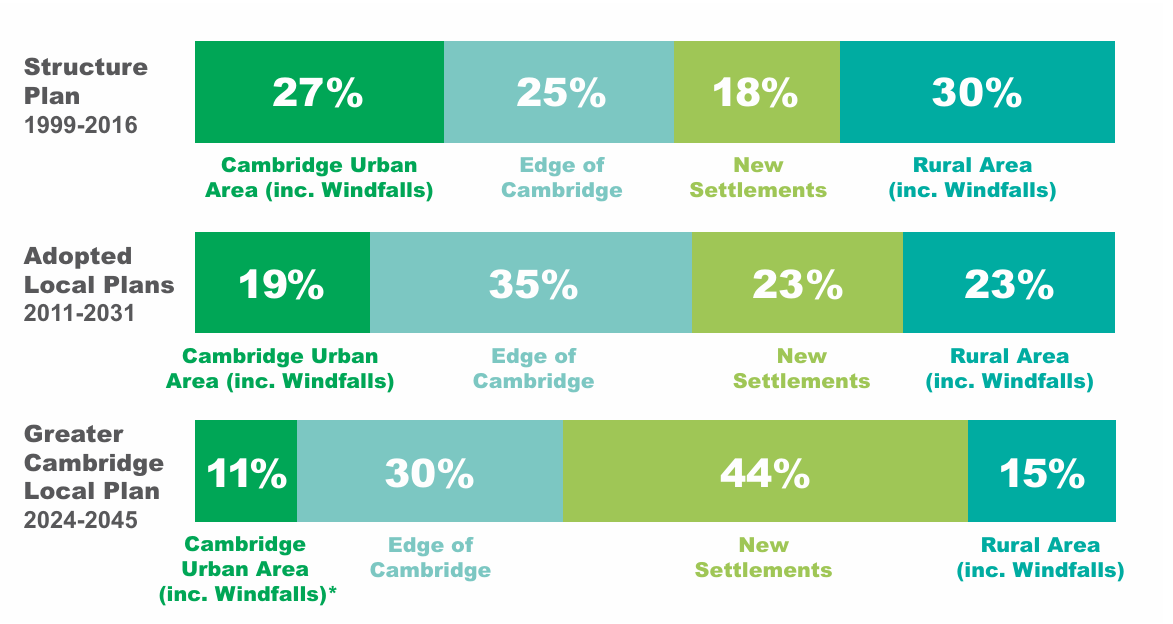
Figure 9: Distribution of growth in comparison to previous Local Plans
Development | Structure Plan 1999-2016 | Adopted Local Plans 2011-2031 | Greater Cambridge Local Plan 2024-2045 |
Cambridge urban area (including windfalls) | 27 | 19 | 11 |
Edge of Cambridge | 25 | 35 | 30 |
New settlements | 18 | 23 | 44 |
Rural area (including windfalls) | 30 | 23 | 15 |
Table 4: Distribution of housing development 2024-2045
2.74. We have been able to build on earlier strategy decisions for the area, with sites on the edge of Cambridge and new settlements like Northstowe and Waterbeach making a significant contribution to meeting ongoing development needs. We are now able to add to this with sites that will continue to deliver over the longer term at Cambridge East, Cambourne and Grange Farm. Planning early for sites alongside infrastructure that will continue to deliver will help us maintain land supply for homes and jobs and reduce the need for development in less sustainable locations.
2.75. It is expected that our urban extensions and new settlements will deliver a further nearly 24,000 homes beyond 2045.
Ensuring a deliverable plan
2.76. National planning policy says that plans should be deliverable. Delivery of the sites included in this plan, which will contribute to meeting our Vision for Greater Cambridge, is reliant on the provision of a significant level of infrastructure – in particular water supply, waste water treatment, and a sustainable and effective transport network. Delivery of this infrastructure is the responsibility of a range of local and national partners. As such, delivery of the plan’s vision relies on these partners reflecting the strategy for Greater Cambridge in their own strategies and delivering on these in a timely way.
Water supply
2.77. Greater Cambridge’s water supply currently comes from groundwater, and abstraction needs to be reduced to respond to climate change and protect our precious chalk streams. The government has formed the Cambridge Water Scarcity Group, bringing together relevant agencies to deliver short and long-term solutions.
2.78. Working with the group, we commissioned a study to explore whether the growth needs identified in the Local Plan could be met. In the shorter term, a range of measures are being implemented to improve the efficiency of how water is used. In the medium term, a pipeline connection to Grafham Water will boost supplies to the Cambridge area from 2032, and the Fens Reservoir will further increase supplies from the mid 2030’s. The first new homes at new strategic sites including Cambridge East, Cambourne, and Grange Farm, are not anticipated to be completed in the housing trajectory accompanying this Local Plan until 2032 when the new pipeline connection is anticipated to be operational. Delivery and phasing plans will need to demonstrate engagement with the water industry, and respond to the availability of water supply improvements. Grampian conditions may be used if necessary to relate occupation to water availability.
2.79. The Regional Water Plan prepared by Water Resources East, identifies that in the longer term, into the 2040’s and beyond, adaptive approaches and new infrastructure such as desalination will be needed in the East of England to ensure there continues to be water available to meet needs whilst protecting the environment. Cambridge Water adopted their Water Resource Management Plan in Spring 2025, and this will be reviewed every 5 years.
Waste water treatment
2.80. If the Cambridge Waste Water Treatment Plant (CWWTP) relocation does not take place, upgrades will be required to the existing CWWTP at North East Cambridge to ensure it can deal with future wastewater flows in a sustainable way. Anglian Water have committed to identifying the alternative measures needed to address current and future development needs..
2.81. Investment will also be needed at other waste water treatment works to serve the allocations proposed in this plan. Anglian Water have started work on a new Drainage and Waste Water Management Plan (DWMP), a statutory plan they are required to prepare which identifies how they will accommodate future growth needs including arising from this local plan.
Transport Strategy
2.82. Our proposed strategy is heavily informed by the location of existing and committed public transport schemes. For example, focus growth at Cambourne takes advantage of the proposed East West Rail station and the proposed public transport improvement in the Cambourne to Cambridge corridor; equally, Cambridge East is supported by the proposed Cambridge Eastern Access public transport corridor improvements, and would be made more sustainable still if a potential new rail station is delivered at the site.
2.83. A Greater Cambridge Transport Strategy is being prepared by the Cambridgeshire and Peterborough Combined Authority that will include the mitigation and infrastructure requirements necessary to promote sustainable travel as part of the Local Plan development strategy.
2.84. The foundations for the emerging Transport Strategy are improvements to key corridors, that will provide significant transport capacity to support the delivery of committed development. We are working together with local partners to support delivery of these schemes. Beyond these schemes, the evidence supporting the emerging Local Plan development strategy identifies additional mitigation and infrastructure required to enable delivery of the new sites included within the preferred development strategy.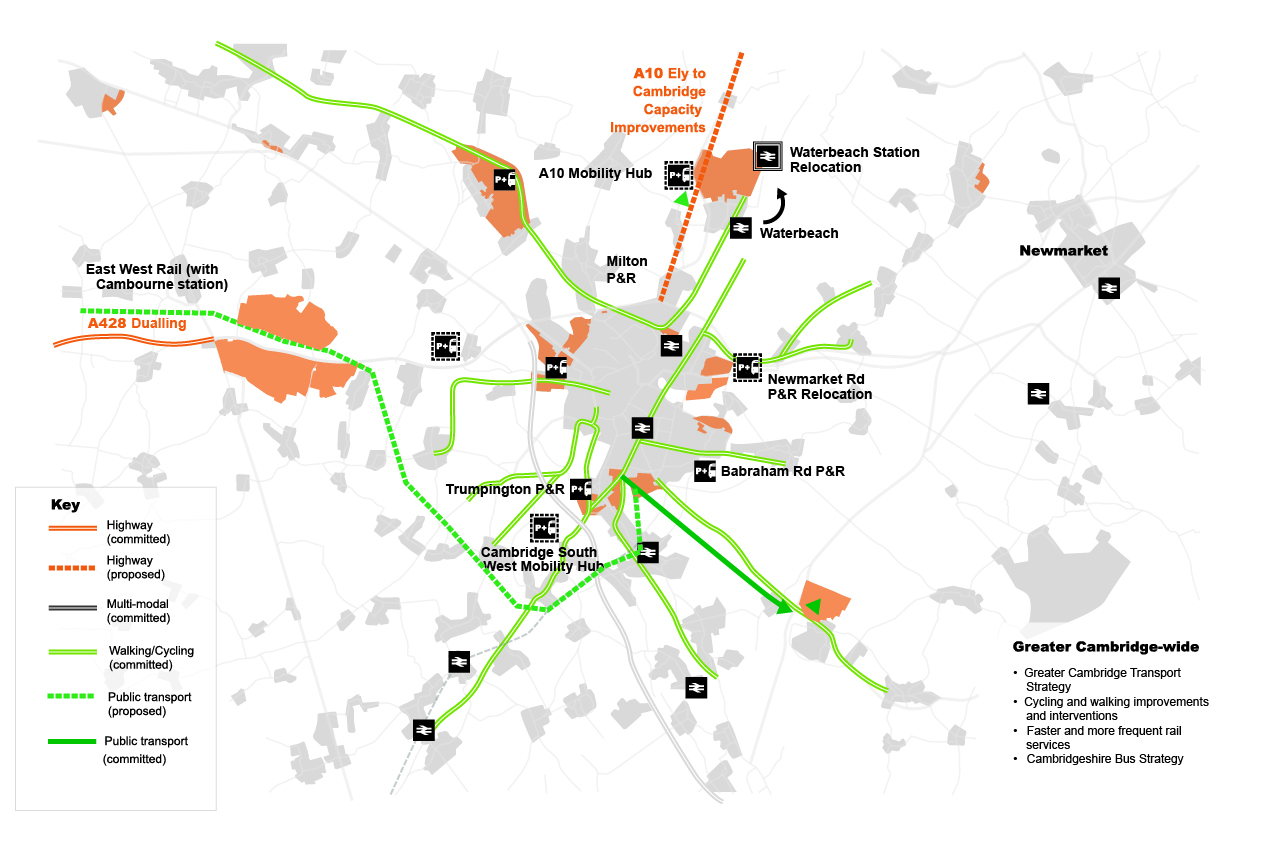
Figure 10: Map of existing and proposed major transport projects
2.85. The Combined Authority has published a draft interim Greater Cambridge Transport Strategy alongside the Proposed Submission Local Plan, and is committed to adopting a final Strategy in time to support the submission of the Local Plan. The draft interim Transport Strategy identifies transport measures for the area, including proposed solutions to address the severe congestion challenges experienced in Cambridge. In combination, these site specific and strategic measures demonstrate that the sites included in the plan can be delivered. The final Transport Strategy will be adopted before the Local Plan is submitted for independent Examination.
Duty to Cooperate
2.86. The preferred Local Plan development strategy has been informed by engagement with relevant organisations in line with the requirement in national planning policy for local authorities to maintain effective cooperation on plan making, ensuring we have fully considered strategic cross-boundary matters. The engagement we have completed to consider these strategic issues is evidenced in our Statement of Compliance. Where we have sought to agree an aligned position with relevant organisations on a particular matter of substance, this is set out in our draft Statement of Common Ground.
2.87. We are not currently aware of any unresolved strategic cross-boundary matters that would prevent the preferred strategy from being delivered. The Councils have not asked neighbouring districts to meet their development needs; nor have we been asked to meet the development needs of other districts. We will continue to engage with all relevant organisations as we take the plan forward.
Meeting the needs of Gypsies, Travellers and Travelling Showpeople
2.88. The Accommodation Needs Assessment (ANA) for Gypsies, Travellers and Travelling Showpeople makes a series of recommendations for meeting the accommodation needs of these communities. The accommodation needs of Gypsies, Travellers and Travelling Showpeople will be met in the following ways:
Safeguarding existing pitches and plots
2.89. To ensure that the accommodation needs of Gypsies, Travellers and Travelling Showpeople are continually met over the plan period, it is important that existing and future pitches (or sites) and plots (or yards) are retained for their existing use and not lost to other alternative uses. Any pitches for Gypsies and Travellers or plots for Travelling Showpeople with unrestricted planning permission need to be safeguarded for that use. Unrestricted planning permission means not subject to conditions restricting the time limit of occupancy (such as temporary planning permission) or occupancy to specific individuals or families (such as personal planning consents).
2.90. The ANA outlines that Gypsy and Traveller pitches may become available in the future on these site as a result of: household dissolution, through making pitches available that are currently occupied by households that are not Gypsies and Travellers; and through intensification within existing sites. Considering these sources of supply results in the potential for 90 additional pitches by 2045:
- Potential for 16 pitches from household dissolution by 2040/41;
- Potential for up to 70 pitches to be made available if enforcement action can be taken; and
- Potential for 4-5 pitches through intensification within existing sites.
2.91. Action will continue to be undertaken to optimise the use of existing pitches, and a specific policy (Policy S/AMC/GT: Optimising Gypsy and Traveller sites) is included that relates to Chesterton Fen Road (Milton) and Smithy Fen (Cottenham).
2.92. An additional 8 plots for Travelling Showpeople have been permitted through intensification of the number of plots within an existing yard. These additional 8 plots count towards meeting the identified needs for 2023/24 to 2044/45.
Provision of additional pitches or plots through regularisation of those not permanently authorised and through provision within strategic sites
2.93. The ANA identified 16 pitches for Gypsies and Travellers on sites within South Cambridgeshire that were not permanently authorised at the time of completing the assessment. Permanent planning permission has since been secured for 19 pitches, a further 3 pitches are considered to be lawful, and a pitch has a permission in principle, resulting in an additional 23 pitches that count towards meeting the identified needs for 2024-2045.
2.94. No suitable new standalone sites have been identified through the call for sites process or through
a review of other available sources.
2.95. The Local Plan as a whole seeks to direct new homes to sustainable locations where active and public transport is the natural choice, with jobs, services and facilities located near to where people live, and national planning policy states that local planning authorities should very strictly limit new pitches or plots in the open countryside that are away from existing settlements. Strategic sites provide an opportunity to deliver new Gypsy and Traveller pitches, alongside other types and tenures of housing, to ensure that new communities meet the needs of different groups in sustainable locations with access to services and facilities. Gypsy and Traveller pitches are therefore required within the following strategic sites (as set out in the allocation policies):
- Northstowe: 24 pitches
- Waterbeach New Town: 24 pitches
- Bourn Airfield New Village: 12 pitches
- Cambridge East – airport: 24 pitches
- Cambourne North: 24 pitches
- Land adjacent to A11 and A1307 at Grange Farm: 12 pitches.
2.96. The delivery of pitches at strategic sites will need to take account of when relevant infrastructure will be provided, and therefore not all of these pitches are anticipated to be delivered within the Plan period. Some will come forward beyond 2045.
Criteria-based policy for windfall pitches and plots
2.97. Policy H/GT: Gypsy and Traveller pitches and Travelling Showpeople plots is a criteria based policy to be used for making decisions on any windfall Gypsy and Traveller pitches or Travelling Showpeople plots within Greater Cambridge. Any future permanent Gypsy and Traveller pitches or Travelling Showpeople plots that are permitted on windfall sites will count towards meeting the identified needs for 2024-2045.
Summary
2.98. For Gypsies and Travellers, the sources of supply identified above could provide around 185 pitches by the end of the plan period, exceeding the identified need. This includes specific deliverable sites for the first five years and specific deliverable sites, specific developable sites and broad locations for year 6 onwards.
2.99. For Travelling Showpeople, the sources of supply identified above could provide at least 8 plots by the end of the plan period. Although this does not meet the identified need, the outstanding need is modest, and the Showmen’s Guild of Great Britain have highlighted that they would like the flexibility to decide where a new plot or yard will be most appropriately located for them. Relying on windfall sites to meet this outstanding need is a reasonable and proportionate response to the situation. Specific deliverable sites have been identified for the first five years, and broad locations have been identified for year 6 onwards.
Meeting the needs of older people and people with disabilities
2.100. The accommodation needs of older people and people with disabilities will be met in the following ways:
Existing commitments specifically for specialist housing for older people and people with disabilities
2.101. Within our completions 2024/25 and existing commitments, there are a small number of standalone developments for specialist housing for older people which are anticipated to deliver 185 dwellings (as self-contained dwellings or dwelling equivalents from bedspaces) within the plan period 2024-2045.
Specialist housing within strategic sites
2.102. The Local Plan as a whole seeks to direct new homes, including any specialist housing, to sustainable locations where active and public transport is the natural choice, with jobs, services and facilities located near to where people live. Strategic sites provide an opportunity to deliver specialist housing for older people and people with disabilities, alongside other types and tenures of housing, to ensure that new communities meet the needs of different groups in sustainable locations with access to services and facilities. Specialist housing is therefore required within the following strategic sites (as set out in the allocation policies):
- Cambridge East – land north of Cherry Hinton: a retirement living facility including 66 bedspaces (equivalent to 35 dwellings)
- Northstowe: 850 units for specialist housing (within the up to 8,500 dwellings on phases 2, 3A and 3B)
- Waterbeach New Town: 1,050 residential institutional units (within the up to 11,000
dwellings) - Bourn Airfield New Village: 250 residential institutional units, in addition to the up to 3,500
dwellings - Eddington (North West Cambridge): a senior living facility including 75 bedspaces (equivalent to 39 dwellings) and 250 units for specialist housing (within the 2,500 dwellings)
- Cambridge East – airport: 800 units for specialist housing (within the 8,000 dwellings)
- Cambourne North: 1,300 units for specialist housing (within the 13,000 dwellings)
- Land adjacent to A11 and A1307 at Grange Farm: 450 units for specialist housing (within the 4,500 dwellings).
2.103. The delivery of specialist housing for older people and disabled people will need to take account of when relevant infrastructure will be provided, and therefore as it is expected that some of these developments will continue to deliver beyond 2045, not all of this specialist housing is anticipated to be delivered within the plan period. Within the strategic sites, it is anticipated that 2,636 dwellings (as self-contained dwellings or dwelling equivalents from bedspaces) will be delivered within the plan period of 2024-2045.
Criteria-based policy
2.104. Policy H/SH: Specialist housing is a criteria based policy to be used for making decisions on any windfall specialist housing for older people and disabled people within Greater Cambridge. Any developments that are permitted on windfall sites will count towards meeting the identified needs within the plan period.
Other ways of meeting the accommodation needs of older people and disabled people
2.105. Policies in the Local Plan, such as Policy H/HM: Housing mix and Policy H/SS: Residential space standards and accessible homes, alongside other approaches relating to the delivery of care, will help older people and disabled people to downsize or stay within their community through ‘whole life housing’ approaches. Additionally, new homes designed and built to meet accessible and adaptable homes standards and wheelchair user standards will contribute towards meetings the needs of those with mobility related disabilities. These approaches could offset some of the identified need for specialist housing for older people and disabled people.
Summary
2.106. In summary, anticipated delivery within the plan period from the above sources are expected to fully
meet the identified accommodation needs of older people and disabled people.
Meeting the needs of students
2.107. The accommodation needs of students will be met in the following ways:
Existing commitments specifically for student accommodation
2.108. Within our completions 2024/25 and existing commitments, there are a number of standalone developments for specialist accommodation for students, and these developments are anticipated to deliver 1,164 student bedrooms within the period of 2024-2033. There are a further 1,675 student bedrooms with outline planning permission at Eddington and 118 new student bedrooms allocated at Old Press / Mill Lane that are currently anticipated to be delivered after 2033, but which could be delivered sooner if necessary to meet the identified need.
Specialist housing within strategic sites
2.109. The Local Plan as a whole seeks to direct new homes, including any specialist housing, to sustainable locations. Strategic sites provide an opportunity to deliver specialist accommodation for students, alongside other types and tenures of housing, to ensure that new communities meet the needs of different groups in sustainable locations with access to services and facilities. Specialist accommodation for students may therefore be provided within strategic sites, and any student accommodation provided on these sites will count towards meeting the identified needs within the period of 2024-2033.
Criteria-based policy
2.110. Policy H/SA: Student accommodation is a criteria based policy to be used for making decisions on any windfall specialist accommodation for students within Greater Cambridge. Any developments that are permitted on windfall sites will count towards meeting the identified needs within the period of 2024-2033.
Summary
2.111. In summary, anticipated delivery by 2033 from the above sources are expected to fully meet the identified accommodation needs of students.
Tell us what you think
For further guidance on how to submit comments, please see the Representation Guidance Note.
All comments must be received by 25 September 2026 at 5pm.