Policy S/C/AMC: Cambridge Areas of Major Change
1. Development within designated Areas of Major Change (AMC) within Cambridge, as shown on the Policies Map, should be of the highest quality design and incorporate the principles of sustainable design and construction. Excluding very minor development, development proposals within AMCs must be accompanied by the necessary supporting infrastructure, delivered as part of the development or through other stakeholders including relevant local public bodies/organisations. This may include temporary provision where appropriate.
2. Development may be delivered in advance of such provision, subject to assessment that demonstrates that the proposal will not cause unacceptable impacts.
3. Additionally, development will be supported:
- Where it is in accordance with a comprehensive implementation plan for the area which has demonstrable support from all key landowners, or it is supported by evidence to demonstrate that the comprehensive and successful delivery of the development can still take place without this being secured;
- Where the development is based on clearly articulated and justified objectives and approach through the provision of a site-wide masterplan, strategies and/or other over-arching coordination documents;
- In instances where the infrastructure provision is to be phased, an approved phasing strategy is in place; and
- Where they enable active streets and vibrant places that encourage social interaction and foster a sense of community by improving both accessibility and inclusivity. This should include providing external plant equipment and/or utility connections to support temporary outdoor community and cultural activities. Where relevant, Community and Cultural Plans should be prepared to demonstrate a robust, evidence-led and locally responsive approach for their provision.
4. In protecting existing assets, including open space, heritage assets, landscape and water management, development should:
- Seek to protect and enhance public rights of way where possible and existing public assets;
- Develop a new, strong landscape framework that is guided by and incorporates existing positive landscape and townscape features and heritage assets; and
- Where practicable, undertake on-site strategic landscaping to the agreed
framework early in the development of the site so that this will become established as development proceeds.
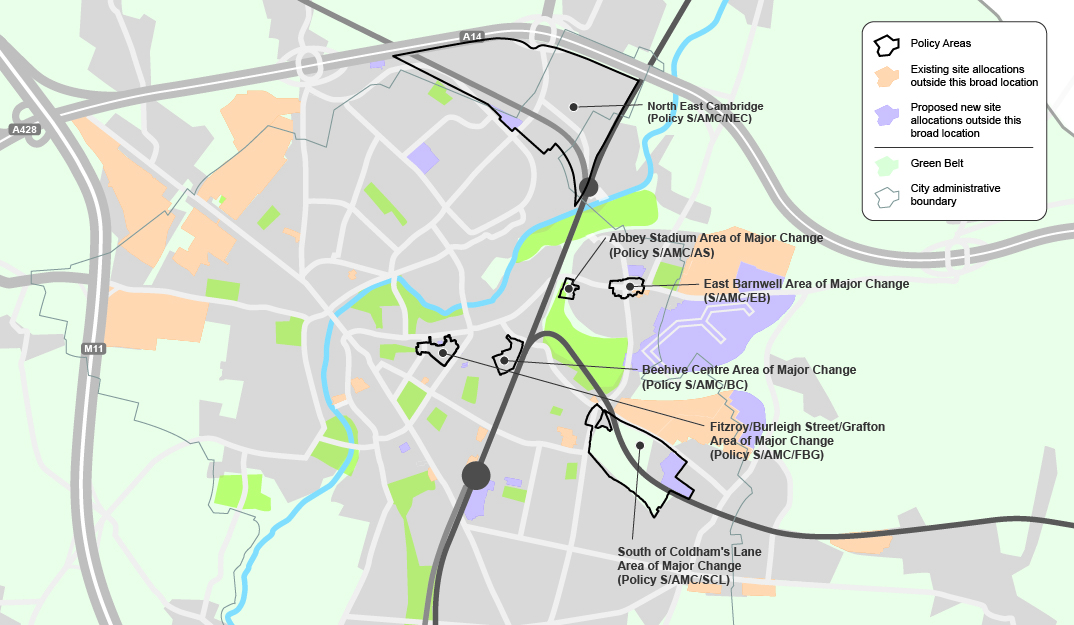
Figure 37: Map showing Areas of Major Change in the Cambridge policy area.
Supporting information
3.1.78. This policy applies to the Areas of Major Change within Cambridge, which are large development areas, in key locations which require a comprehensive approach to development and renewal through an implementation plan, over-arching framework or equivalent masterplan to guide their transformation in a joined-up manner.
3.1.79. These areas will often require significant infrastructure investment, including active travel, public transport and delivery of the Rights of Way Improvement Plan, especially where they form part of a wider network of infrastructure improvements with neighbouring or nearby sites and transport hubs. A co-ordinated approach is especially important, given the length of time often needed to transform or re-configure these areas. It is therefore essential short-to medium term proposals have regard for the area’s longer-term aspirations including transport projects and connections with adjoining areas.
3.1.80. This holistic planned approach will also ensure that opportunities to make the best use of land, in sustainable locations creating vibrant neighbourhoods are maximised, along with their careful integration with existing nearby communities. The enhancement of existing positive landscape and townscape features along with local heritage assets and environmental resources, such as SUDs features and existing water courses, will also help create successful communities. The provision of suitably designed public realm areas with access to utility connections will also facilitate regular community and cultural events. These should help development community development and integration with the peripheral neighbourhoods.
Tell us what you think
For further guidance on how to submit comments, please see the Representation Guidance Note.
All comments must be received by 25 September 2026 at 5pm.