Policy CC/IW: Integrated water management, sustainable drainage and water quality
1. All development proposals must adopt an integrated approach to water management which considers water efficiency, sustainable drainage, water quality, flood risk and biodiversity. Water management must be:
a. Planned at a strategic level for the whole development;
b. Incorporated into the design process at the earliest opportunity;
c. Designed in such a way that does not prejudice the delivery of development at an adjoining site; and
d. Designed in such a way that makes use of nature-based solutions and natural flood management techniques wherever practicable.
2. Evidence of a site-wide Integrated Water Management approach should be provided as part of a Sustainability Statement.
Sustainable Drainage Systems
3. Development proposals must demonstrate how adequate surface-water drainage will be achieved, following the surface water drainage priority order set out below:
a. Firstly, surface water runoff is collected for non-potable use;
b. Then discharged into the ground via infiltration;
c. Then discharged into a waterbody;
d. Then discharged into a surface water sewer;
e. Then discharged into a combined sewer.
4. New development must ensure that Sustainable Drainage Systems (SuDS) are an integral part of an Integrated Water Management approach to the design of the whole site. Development will be permitted provided that:
a. Surface water is managed close to its source and on the surface where reasonably practicable to do so;
b. There is no discharge from the developed site for rainfall depths up to 5 millimetres (mm) of any rainfall event;
c. SuDS have been designed to take into account climate change and the impact it may have over the lifetime of the development;
d. Opportunities have been taken to integrate SuDS in ways that create amenity, enhance biodiversity, and contribute to a network of high-quality green open space, whilst also ensuring the development responds positively to the local character and site-specific constraints;
e. All hard surfaces are permeable surfaces wherever practicable and having regard to groundwater protection;
f. Any flat roof is a green or brown roof, provided that it is acceptable in terms of its context, its relationship with the historic environment, and the structural capacity of the roof if it is a refurbishment;
g. SuDS have been suitably designed to manage water quality to avoid the risk of pollution and sediment entering groundwater and watercourses; and
h. Details of the future management, maintenance and adoption of the SuDS are provided, including who will be responsible, to ensure they will function effectively over the lifetime of the development.
5. The design and implementation of SuDS must be in line with the updated Construction Industry Research and Information Association (CIRIA) SuDS Manual and the National Standards for SuDS or successor documents and other best practice guidance.
Water quality
6. To protect and enhance water quality, all development proposals must demonstrate that:
a. There is capacity for wastewater treatment and adequate wastewater conveyancing infrastructure to serve the whole development, or an agreement is in place with the relevant service provider to ensure the provision of the necessary infrastructure prior to the occupation of the development (where development is being phased, this must be demonstrated for each phase before first occupation);
b. Appropriate water treatment and pollution control measures have been incorporated into the proposed foul and surface-water drainage systems to minimise the risk of water pollution. Soakaways and infiltration SuDS are unlikely to be suitable in areas of contaminated land unless it can be demonstrated that there is no risk of mobilising pollutants into groundwater or surface water; and
c. The quality of ground water and surface water bodies will not be harmed by the construction or operation of the development, and that opportunities have been explored and taken to maintain or improve water quality, including through nature-based solutions.
7. The foul drainage system in all development proposals should connect to a mains public sewer. Where it is demonstrated that this would not be feasible, alternative facilities may be allowed provided they do not pose an unacceptable risk to water quality for the lifetime of the development.
Supporting information
4.31. Integrated Water Management (IWM) is a holistic approach to water management that considers water supply, wastewater, flood risk and water quality in a coordinated way with the aim of ensuring the long-term sustainability of water resources and ecosystems. The concepts of ‘water smart communities’ and ‘sponge cities’ have similar aims. A sponge city is designed to mimic natural processes by absorbing, storing and gradually releasing rainwater, much like a sponge soaks up water. Green infrastructure is used to manage rainwater runoff to prevent flooding and improve water quality.
4.32. Figure 108 shows the interlinked components of an effective IWM system (see Figure 108). Weather pattern changes and the increasing occurrences and intensity of flooding and drought events, all of which are being influenced by global climate change, are making effective IWM increasingly important for both urban and rural environments. Therefore, it is crucial that IWM is considered at an early stage in the design process of any development. Appropriate water management measures for a particular development will depend upon the scale and nature of the development, but even at a small scale, measures such as permeable paving, green roofs and water butts can slow down the discharge of water, enable the reuse of water, and enhance biodiversity. The policy requires suitable flat roofs to be green or brown roofs. This should include garage and cycle sheds.
4.33. The surface water drainage priority set out in the policy begins with the collection of rainwater for non-potable use, which is in line with the requirements of this plan to make developments as water efficient as possible. However, the surface water drainage network must be designed without taking this into account as a form of attenuation, because at times rainwater storage could be at capacity, for example during the winter months. Infiltration should be maximised on site by way of sustainable drainage systems before moving further down the priority order where this is not possible.
4.34. Sustainable drainage systems (SuDS) are a key component of IWM. SuDS re-create the benefits of natural drainage systems, allowing infiltration and storage of water and reduce the rate and volume of water entering fluvial systems following storms therefore reducing peak flood levels. They also provide other benefits such as water filtration, which can improve water quality. Infiltration SuDS help to recharge aquifers which support the baseflows of the chalk streams and reduce the flow peak and volumes entering the Fens, which is increasingly important due to climate change. They also provide biodiversity and amenity enhancements, which can have positive implications for both human and environmental health. Ensuring that there is space for SuDS and the creation green infrastructure needs to be considered early in the design process for new developments. Details of the management, maintenance and adoption of SuDS, including who will be responsible for carrying this out will be secured through condition or planning obligation to ensure that they function effectively over the lifetime of the development. This will include removal of debris and sediment to ensure that there are no areas of standing water which will lower the risk of vector borne diseases associated with climate change.
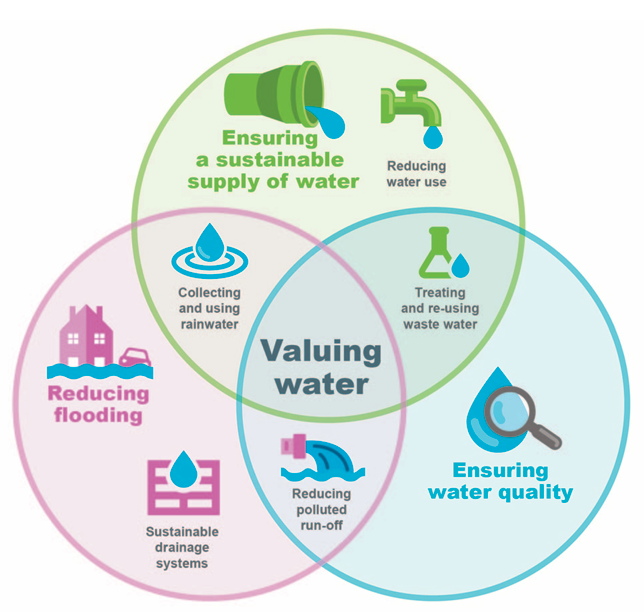
Figure 108: Integrated Water Management (IWM) approach.
4.35. Guidance on the design of SuDs and surface water management can be found in the SuDS Manual, National Standards for Sustainable Drainage Systems, Cambridgeshire County Council’s Surface Water Planning Guidance and the Cambridgeshire Flood and Water SPD or successor documents. These documents (or their successor documents) should be referred to when designing an appropriate drainage strategy for a new development. For major development on land with surface water drainage issues, Cambridgeshire County Council, the Lead Local Flood Authority, must be consulted.
4.36. To further protect and enhance water quality, the policy also requires that engagement has been undertaken with the service provider, Anglian Water, to confirm that there is capacity for wastewater treatment at a receiving Water Recycling Centre, and capacity in the wastewater conveyancing infrastructure or that extra capacity will be provided in time to serve the new development prior to first occupation. Where necessary, phasing conditions will be attached to planning permissions to ensure that new developments are not occupied until the required capacity is in place. Applicants will need to secure a connection with Anglian Water and for major developments details should be included as part of a Utilities Statement in line with the requirements in Policy I/ID. For minor development planning applications, where required, details of a connection can be provided as part of a Sustainability Statement, a Design and Access Statement or a Planning Statement for the proposed development.
4.37. Appropriate water treatment and pollution control measures will need to form part of the surface drainage system / SuDS to prevent contamination of water on the site or downstream during the construction and operation of the development. In areas of contaminated land, soakaways and infiltration SuDS may not be suitable, and additional assessment must be carried out to identify the most suitable drainage system in order to prevent the mobilisation of contaminants into groundwater or surface water. Applicants must refer to the SuDS guidance referenced above and the Environment Agency’s groundwater protection guidance.
4.38. There is a first presumption for all development to discharge wastewater to the mains public sewers. Proposed developments should only include non-mains drainage if it can be demonstrated that a mains connection is not feasible in terms of cost and/or practicality, in accordance with National Planning Practice Guidance and Part H of the Building Regulations, because of the greater risk of failures leading to the pollution of the water environment.
Tell us what you think
For further guidance on how to submit comments, please see the Representation Guidance Note.
All comments must be received by 25 September 2026 at 5pm.