Policy S/AMC/NEC: North East Cambridge Area of Major Change
Objectives and place identity
1. North East Cambridge (NEC) is designated an Area of Major Change. Proposals within NEC should be broadly aligned with the North East Cambridge Indicative Spatial Framework and should support the development of a thriving, well-connected, mixed use innovation district by:
- Contributing positively to Greater Cambridge’s internationally significant role in research, innovation and knowledge-based industries;
- Supporting integration of different uses across the area, including complementary uses such as residential, mid-tech and industrial uses;
- Enabling the delivery of high quality, inclusive and distinctive urban places that integrate successfully with the wider City; and
- Delivering and/or contributing to measures that enhance and prioritise active travel and public transport connections throughout the area and into neighbouring areas, building on the excellent strategic connectivity provided by Cambridge North Railway Station and the Cambridge Guided Busway.
Uses
2. Developments should contribute to the creation of mixed-use places throughout the NEC area, structured around vibrant activity nodes that integrate working, learning and leisure functions and, where conditions allow, residential uses.
3. Development proposals for new or intensified Commercial and Research & Development (E(g)i) and E(g)ii) at existing campuses, including Cambridge Science Park, St John’s Innovation Park and Cambridge Business Park, will be supported where they:
- Facilitate innovation, knowledge exchange and opportunities for collaboration between different businesses across the area;
- Make efficient use of land through intensification, including rationalising surface car parking to increase building coverage and increased heights and housing and employment densities where appropriate;
- Incorporate flexible design features to enable floorspace to be reconfigured over time as business needs evolve;
- Support inclusive growth, enabling access for a range of business sizes, including start-ups and small and medium-sized enterprises (SMEs) through provision of flexible spaces, smaller unit sizes, and shared business support or collaboration space;
- Provide an appropriate quantum of affordable or managed workspace;
- Provide facilities, services and amenities to meet workforce needs, support innovation activity and knowledge exchange, and extend activity through the day; and
- Contribute towards initiatives that reinforce the district’s role as a focus for innovation-led economic activity, including smart city projects, supporting skills development and local employment opportunities.
4. Reflecting the important contribution of existing Light Industrial, Mid-Tech, Storage and Distribution (E(g)(iii), B2, B8) uses to the economies of the innovation district and Cambridge more broadly, development proposals for the Cowley Road Industrial Estate that would result in the loss of existing floorspace will be resisted, unless the proposal demonstrably results in a net gain in industrial capacity or functionality. Development proposals for the intensification of such uses at the Cowley Road Industrial Estate (and similarly environmentally constrained sites adjoining it) will be supported where they make efficient use of land and increase the supply of industrial floorspace. Proposals should:
- Retain and strengthen E(g)(iii) / B2 / B8 uses, with particular support for mid-tech provision that complements and supports research, prototyping, engineering, servicing, logistics and operational activities within the innovation district;
- Where redevelopment is proposed, deliver a net increase in industrial floorspace through more efficient and innovative building typologies and layout, and the consolidation or co-location of compatible employment activities;
- Support the delivery of flexible workspace capable of accommodating a range of employment needs, including scale-up, maker, laboratory support and hybrid industrial uses;
- Be designed to ensure they are capable of adapting to changing industrial needs and not prejudice long term redevelopment of sites in the Cowley Road Industrial Estate’s immediate context;
- Respond appropriately and sensitively to their surroundings, incorporating sympathetic design features that support the creation of a high-quality urban place;
- Ensure the safe and efficient operation of industrial uses, including appropriate servicing, access, yard space and mitigation of any impacts on adjacent uses, such as traffic, noise and emissions; and
- Make financial contributions towards feasibility work to identify and deliver a safe, segregated access route for HGVs and commercial traffic which avoids Cowley Road.
5. Proposals for residential development in NEC will be supported where they complement and support employment and other uses in the wider innovation district. Proposals should:
- Include a range of types and tenures of high-quality accommodation, including Build to Rent and tenures alongside general market and affordable homes; and
- Integrate successfully with employment areas, neighbourhood facilities and public spaces to support inclusive, healthy and walkable places.
6. Reflecting the aspiration to bring forward comprehensive regeneration of the site, proposals for new and/or additional employment floorspace within the Nuffield Road Industrial Estate will not be supported. Proposals for residential development within the Nuffield Road Industrial Estate will supported provided they:
- Accord with an approved or agreed site-wide masterplan framework for the entire Nuffield Road Industrial Estate;
- Would not prejudice the delivery of the wider site, including adjacent land parcels;
- Secure the replacement of industrial floorspace of equal or greater employment value off-site, preferably as part of the redevelopment and intensification of industrial floorspace within the Cowley Road Industrial Estate or new provision adjacent to the Aggregates Railhead; and
- Where temporary arrangements are needed, for example in terms of access, open space or servicing, they should be designed to facilitate seamless transition to a comprehensive scheme.
7. Development affecting Cambridge Regional College must support its role as an important education, skills and innovation hub, including improved sustainable access and integration with surrounding streets and public spaces.
The development of North East Cambridge must do the following:
Context
8. Reflecting North East Cambridge’s long history of industrial uses, including manufacturing and waste and waste water treatment, development proposals must demonstrate they are able to overcome existing environmental constraints, accord with protective designations (including in the wider Development Plan) and not conflict with ongoing sensitive uses that are protected or supported elsewhere in this policy.
9. Where a proposal affects land where historic contamination is known or suspected, a Remediation Strategy must be submitted for approval by the Local Planning Authority as part of the application, setting out measures necessary to make the site suitable for its intended use.
10. Any development proposal within a designated Minerals and Waste Consultation Area for a safeguarded use (as designated in the Cambridge and Peterborough Minerals and Waste Plan 2021 or successor), and/or the Odour Zone associated with the Cambridge Waste Water Treatment Works, must apply the Agent of Change principle and will need to robustly assess the impacts and risks, and demonstrate that the proposal will:
- Not prejudice the operation of the safeguarded use;
- Not result in unacceptable amenity issues or adverse impacts to human health for the occupiers or users of the proposed development due to the ongoing operation of the facility;
- Ensure that any mitigation measures proposed either as part of the new development or in relation to the existing operation or its site are deliverable, secured, and maintained for the lifetime of the development; and
- Ensure that all costs can be met by the applicant.
11. Development should not preclude operation and maintenance of sewer pumping stations located within or adjacent to the site.
Built form
12. Development proposals should:
- Deliver compact, mid- to higher-density development appropriate to the highly accessible location, making efficient use of land and promoting walkability, public transport use and vibrant urban activity;
- Locate increased building heights in well-justified positions, including activity centres, transport nodes and key movement corridors, where they reinforce legibility, assist wayfinding and contribute positively to the wider townscape;
- Incorporate innovative, adaptable and durable building typologies that contribute positively to the vision for North East Cambridge and are capable of accommodating evolving research and employment uses over time;
- Incorporate horizontal mixed uses that active frontages, particularly at ground and lower levels, including community, cultural, retail and social uses along key streets and public spaces to support activity throughout the day and evening;
- Avoid inward-facing or campus-style layouts and promote openness, collaboration and inclusivity, maximising opportunities for public access; and
- Where residential development is proposed, ensure the design of buildings and public realm supports residential amenity, environmental quality and the long-term objectives for the area.
13. Large-footprint buildings incorporating laboratory-enabled offices and other research and development and mid-tech employment uses will be supported provided they:
- Are successfully integrated into the urban fabric through articulated massing, subdivision of building volumes and human-scaled street interfaces; and
- Provide active and visually engaging ground-floor frontages that contribute to creating well defined streets and urban spaces.
Public space
14. Developments should deliver and/or contribute to an interconnected network of streets, parks, squares, green corridors and water features that successfully link to the wider green infrastructure network, supporting biodiversity, climate resilience, recreation and health and wellness.
15. Applicants should demonstrate how their proposal contributes to a successful network of well-designed streets and public spaces and enhances connections across the area, including through the delivery of permeable urban blocks and publicly accessible spaces.
Nature
16. All development proposals should support, through direct delivery and/or contributions, a coordinated, multifunctional and connected Green Infrastructure network that protects, enhances and links existing ecological assets, landscape features and blue-green corridors within and adjoining the site. Proposals should:
- Protect and enhance Bramblefields Local Nature Reserve, ensuring no adverse impacts on its nature conservation value, ecological integrity, habitat quality, hydrology, tranquillity or recreational function, and providing appropriate buffers, sensitive layout design and long-term management arrangements;
- Deliver habitat and water quality improvements to the First Public Drain, recognising its role as a key ecological and hydrological corridor, including naturalisation, biodiversity enhancement, sustainable drainage integration and strengthened ecological connectivity;
- Protect, retain, and enhance the Milton Road Hedgerow City Wildlife Site, maintaining it as a continuous linear habitat corridor and securing improvements to structural diversity, ecological function and long-term resilience; and
- Provide joined up and continuous Green Infrastructure provision between adjacent sites, phases of development and land ownerships, ensuring coordinated masterplanning, avoiding fragmentation of habitats and securing a coherent landscape and ecological network.
Movement
17. All development proposals must be designed to prioritise travel by active modes and public transport from the outset. Proposals must be supported by a Transport Assessment at application stage which assesses cumulative impacts on the highways network, reflecting committed and planned developments within NEC. This must demonstrate how the proposal will:
- Comply with the agreed NEC trip budget and ensure a monitor and manage approach is taken to ensure that the development remains within the agreed trip budget for the site throughout its delivery. The agreed trip budget is:
- For the Milton Road access, 3,900 vehicles in the morning peak and 3,000 vehicles in the evening peak; and
- For the Kings Hedges road access, 780 vehicles in the morning peak and 754 vehicles in the evening peak.
- Comply with the agreed mode share targets set out in the NEC Transport Position Statement (or successor document);
- Prioritise walking, cycling and public transport accessibility in low-traffic streets and neighbourhoods;
- Minimise car parking provision and demand;
- Prioritise measures that promote modal choice and seamless interchange between modes, including new or improved mobility hubs at appropriate locations throughout the area;
- Support the creation of a direct, legible network for walking and cycling, with strong connections between adjacent sites, phases of development and land ownerships;
- Deliver and/or contribute towards NEC-wide transport infrastructure, as identified in the Infrastructure Delivery Plan and NEC Transport Position Statement (or successor document);
- Contribute towards strategic transport infrastructure that will serve the NEC area as identified in the Infrastructure Delivery Plan and NEC Transport Position Statement (or successor document); and
- Include monitoring and review mechanisms to be secured through planning conditions and/or planning obligations.
18. Proposals should set out coordinated measures to prevent parking displacement, including control of on-street parking where necessary, and establish a robust approach to monitoring.
19. Development should support the removal of existing barriers to movement by securing and/or contributing to new and improved connections including:
- Crossings of Milton Road through upgraded provision, with grade-separated options where feasible and appropriate;
- Safe crossings of the Cambridgeshire Guided Busway;
- Connections to King’s Hedges, East Chesterton, Fen Road and Milton; and
- Improved access to Cambridge North Station and surrounding employment areas.
20. Proposals should secure and/or contribute to measures that maximise sustainable last mile deliveries across North East Cambridge, including:
- Sites logistics hubs, sited to serve local delivery networks effectively and facilitate efficient goods transfer to cycle logistics and electric vehicles, including cargo bikes; and
- Innovative measures such as dynamic kerbside management, digital logistics, and future technologies (e.g. drones, autonomous vehicles).
21. Where development would result in increased HGV / commercial-vehicle movements, proposals will additionally be required to demonstrate how these would be managed to align with the requirement to prioritise active travel throughout the area, avoiding adverse impacts on safety and permeability and setting out appropriate mitigations where necessary.
Social infrastructure, amenities and other infrastructure provision
22. As appropriate to their scale, nature and location, development proposals must support the creation of a complete and inclusive innovation district by:
- Contributing, where required, towards the timely delivery, expansion or improvement of social infrastructure and community facilities identified in the Infrastructure Delivery Plan, including education, health, community, sports, leisure and cultural provision;
- Contributing to the enhancement and/or expansion of existing neighbourhood facilities, ensuring any development is accompanied by appropriate local services and everyday amenities that support the day-to-day needs of residents, workers and visitors, including shops, food and beverage provision and on-site childcare facilities; and
- Promoting inclusive access to green spaces, sports facilities, leisure opportunities and community activity spaces, where compatible with any relevant restrictive designations.
Lifespan
23. Development proposals within NEC will be supported where they demonstrate compliance with the coordinated delivery and phasing requirements below and do not prejudice comprehensive development within the wider area.
24. To ensure coordinated delivery, proposals should align and integrate with existing uses and consented and planned development in NEC, by:
- Safeguarding land, infrastructure, movement routes and connections required for future phases;
- Coordinating construction logistics and any necessary infrastructure delivery across sites to minimise disruption and support timely delivery;
- Not prejudicing comprehensive redevelopment of or existing/future operations of adjoining sites; and
- Not impeding the continued use of existing strategic site assets, including the Cambridge Waste Water Treatment Works, Cambridge North East Aggregates Railheads and Waste Transfer Station.
25. With the exception of proposals for sites consistent with operations that are subject to ongoing safeguarding in the Development Plan, proposals must be compatible with innovation district activities and:
- Should be designed and phased to operate within an active innovation and employment environment; and
- Must not unreasonably constrain existing or future research, industrial, operational or servicing activities within NEC.
26. All major development must be supported by appropriately detailed phasing and infrastructure strategies ensuring:
- The timely delivery of necessary infrastructure alongside occupation and that occupation does not outpace infrastructure provision; and
- The provision of interim measures, where necessary, to enable safe and effective operation between phases.
27. Early phases of major, multi-phase developments must be delivered as coherent and functional places providing:
- Safe and attractive walking, cycling and public transport access;
- High-quality public realm and active movement networks; and
- Access to services and amenities, which may require an appropriate interim provision.
28. Where comprehensive redevelopment is proposed, development must be supported by site- or phase-based masterplans to achieve effective site co-ordination and realise the wider potential of the area, with supporting parameter plans and design codes demonstrating how these policy principles will be applied consistently across development phases and coordinated between land parcels to secure coherent place-making over time.
29. Proposals should set out how they will secure long-term stewardship, management and maintenance of public realm, green infrastructure, community facilities and other shared assets, incorporating mechanisms for community participation where appropriate and considering any implications across adjoining land parcels.
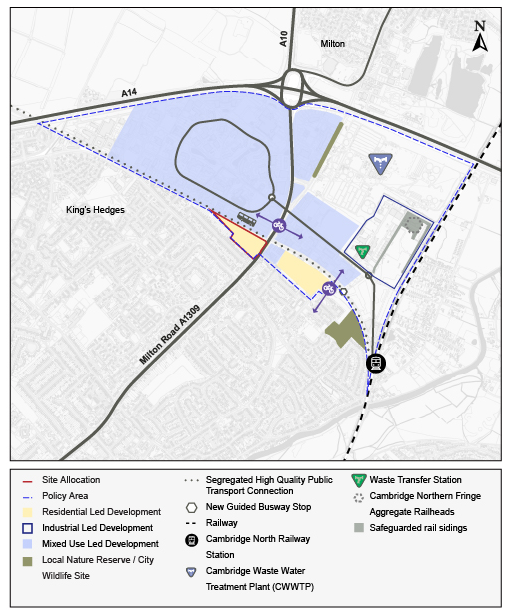
Figure 38: Indicative Spatial Framework for S/AMC/NEC: North East Cambridge Area of Major Change
Supporting information
3.1.81. The North East Cambridge (NEC) Area of Major Change covers approximately 182 hectares of mixed use land, incorporating a nationally significant cluster of research, technology and knowledge-intensive employment uses alongside industrial, production, storage, distribution and mid-tech uses, and key transport and utilities infrastructure. Excellent strategic connectivity is provided by Cambridge North Station and the Cambridgeshire Guided Busway, supporting strong regional and national connectivity and underpinning a future development approach that prioritises active travel and public transport over reliance on the private car.
3.1.82. The policy area establishes a flexible and coordinated framework to guide comprehensive, long-term redevelopment and management of change, reflecting the shared ambition across both public and private sectors to transform the area into a thriving, well-connected, mixed use innovation district, building on the established successes of the existing science parks, maximising emerging opportunities at key accessible nodes, including Cambridge North Station, and retaining and intensifying mid-tech and light industrial uses around the Cowley Road Industrial Estate, making the best and most productive use of this area.
3.1.83. Despite uncertainty around the future operations of the Cambridge Waste Water Treatment Plant, the area remains a priority for coordinated regeneration, investment and intensification of innovation-led, employment uses over the plan period. The area also has the potential to accommodate residential development alongside, where conditions allow, to support the creation of a vibrant, inter-connected innovation district that seamlessly integrates with the wider City.
3.1.84. The policy seeks to maximise these opportunities in the context of various restrictive designations and environmental constraints relating to historic industrial uses and ongoing safeguarded uses in the area, which will have a significant bearing on the types of development and uses that are suitable in different parts of the area. Applicants should, in particular, read this policy in conjunction with the Cambridgeshire and Peterborough Minerals and Waste Local Plan 2021 (or successor document) which includes various safeguarding policies and associated consultation areas pertaining to existing infrastructure within NEC, including the Cambridge Waste Water Treatment Works, Cambridge North East Aggregate Railheads and Waste Transfer Station. Additionally, applicants should consult the Technical Note on interpretation of Odour Impact Assessment for Cambridge Water Recycling Centre, updated in 2020, to understand the acceptability of their proposal and assess any potential impacts and risks to human health due to the ongoing operation of the facility.
3.1.85. Existing industrial, production, storage, distribution and mid-tech activities make an important contribution to the functioning of the innovation district and the wider Cambridge economy. Within areas of NEC that are subject to environmental constraints and restrictive designations, there is still significant scope to make better use of available sites, in particular within and around Cowley Road Industrial Estate. Mid-tech uses within Use Classes B2 (general industrial) and B8 (storage and distribution) can play a targeted enabling role in the innovation district ‘eco-system’ by supporting the practical functions that underpin innovation activity. Research, development and knowledge-based uses benefit from proximate space for prototyping, fabrication, servicing and logistics, helping to bridge the gap between concept and commercialisation. Well-integrated B2/B8 floorspace can also strengthen local supply chains, improving efficiency and reducing delays in day-to-day operations across the wider cluster. In this way, appropriately managed mid-tech uses contribute to a more complete and functional innovation environment without diluting the innovation district’s core knowledge-led focus.
3.1.86. In other parts of NEC, the policy supports higher-density mixed-use development, delivered through well-designed buildings, streets and public spaces. There is scope to further develop the area’s strengths through the intensification of existing commercial sites, where complemented by improvements to public transport and interchange facilities, better pedestrian and cycling integration with the surrounding area, addressing severance along key transport corridors, and greater use of active modes of travel. Proposals will be expected to facilitate innovation, knowledge exchange and opportunities for collaboration, contributing to a diverse and resilient employment offer and supporting the continued growth of the NEC innovation cluster.
3.1.87. Sites unencumbered by the constraints of existing safeguarded minerals and waste operations have capacity to deliver around 650 homes within the plan period, including through mixed-use development of the Chesterton Partnership site and Cambridge Business Park (subject to ongoing planning applications), and residential-led development of the Milton Road Garages site (which is separately allocated for mixed use development in Policy S/C/MRG: Milton Road Garages). The policy also maintains support for the comprehensive redevelopment of the Nuffield Road Industrial Estate, which could support significant improvements in amenity, safety and the environment for neighbouring residents, subject to successfully relocating the existing occupiers to suitable replacement floorspace elsewhere in Greater Cambridge, preferably within NEC. The provision of residential and associated uses could be significantly increased across NEC if the Cambridge Waste Water Treatment Plant is relocated or a means of addressing the odour constraint can be implemented following adoption of this Local Plan.
3.1.88. The Greater Cambridge Infrastructure Delivery Plan (IDP) (2026) has identified that the area will require the delivery of or financial contributions towards: a range of on-site, local and strategic transport infrastructure; provision of a new transformer and primary substation to meet future demand; around 11.2 hectares of accessible green space to meet the demands from future residential and employment growth; and contributions to provision of community space, library provision and a range of sports facilities. The exact quantum and phasing of infrastructure will need to be kept under review as the development comes forward, including phases beyond the plan period. This should be informed by on-going engagement with statutory bodies and undertakers.
3.1.89. A key priority of the policy to remove existing barriers to seamless active travel movement and ensure development supports significant improvements in permeability and connectivity, between different sites within the area and into surrounding areas. Proposals will therefore be expected to support and directly facilitate the creation of a direct, legible walking and cycling network across the area, and contribute to or directly secure, as appropriate, interventions which address existing barriers to movement.
Tell us what you think
For further guidance on how to submit comments, please see the Representation Guidance Note.
All comments must be received by 25 September 2026 at 5pm.