What this policy does
Babraham Research Campus focuses on early-stage bioscience enterprise. Over 60 companies, 2,000 employees and 300 academic researchers are currently located on the site, which sits within the parkland setting of Babraham Hall. This policy will guide future development at the Campus to support the continued success of this nationally important facility.
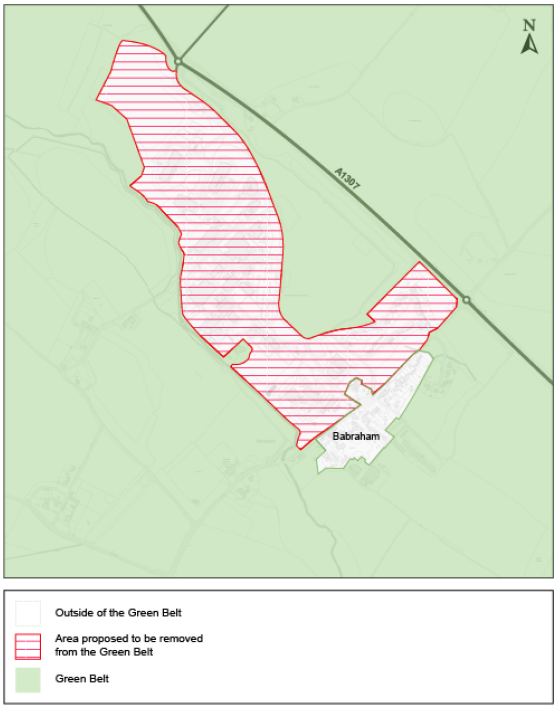
The draft Local Plan proposes to remove the existing built areas and an area for new development from the Green Belt to support the future needs of the Campus.
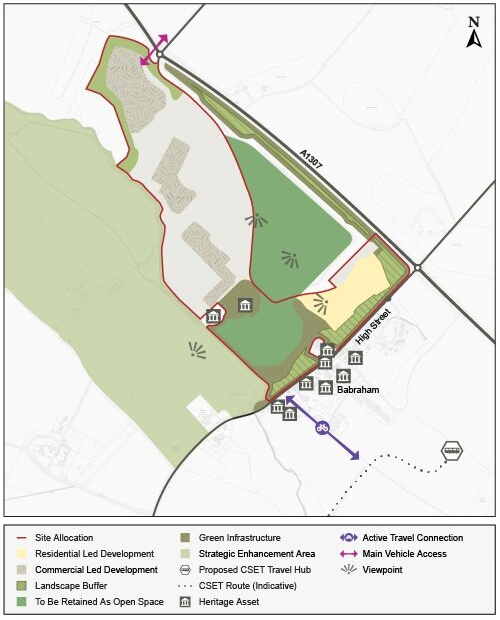
The policy and Spatial Framework identify three areas within the Campus, each with specific policy requirements:
- an employment-led development area that will deliver additional research and development floorspace and ancillary uses;
- a residential-led development area, which would enable the redevelopment of The Close for additional residential units, retail floorspace, additional nursery floorspace, and land for amenity uses; and
- A Strategic Enhancement Area (S/SEA/BRC), located to the south of the River Granta, which is not proposed for development but for green infrastructure and ecological enhancements. The Strategic Enhancement Area also aims to ensure sufficient separation between neighbouring settlements and maintains a soft, green landscape to protect a development’s rural setting. These areas may also be used to deliver other associated uses, including drainage, habitat compensation and informal open space.
Policy S/BRC: Babraham Research Campus
Vision and identity
1. Babraham Research Campus will continue to be a world leading bioscience research and innovation campus, co-locating start up, growing and established bioscience companies. Located at the heart of the Cambridge Southern Cluster life-science ecosystem, the campus will continue to play a key role in bringing together academia and commercial bioscience. It will continue to develop into a place where people can live and work, set within an extensive network of green and blue infrastructure which supports both biodiversity and the health and wellbeing of employees and the wider community.
Uses
2. Babraham Research Campus, including land removed from the Green Belt, is allocated for mixed use development comprising:
a. Within the employment-led development area, approximately 48,000 square metres gross internal area (GIA) additional research and development (Class (E(g)(ii)) floorspace;
b. Within the residential-led development area:
i. approximately 120 additional Campus worker and affordable homes to support the needs of the Campus; and
ii. appropriate supporting ancillary uses and infrastructure, including up to 430 additional square metres nursery space (class (F1)), 500 square metres retail space (sui generis), and amenity space.
3. Development will be required to meet the National Planning Policy Framework Golden Rules for land released from Green Belt, including providing 50% affordable housing on residential schemes.
The development of Babraham Research Campus must do the following:
Context
4. Through the preparation of a Landscape Visual Impact Assessment and Heritage Impact Assessment, protect, and where appropriate, enhance the significance of heritage assets and their setting, including the Grade I Listed St Peter’s Church, Grade II* Listed Babraham Hall and nearby off-site heritage assets.
5. Protect the legibility, appearance, and rural character of the Babraham Conservation area and the Lodge building, a non-designated heritage asset.
6. Limit development of new buildings to areas of existing development, undeveloped areas of land in the far north of the site, and The Close residential area. Gardens surrounding the Grade I Church and Grade II* Babraham Hall should be excluded from development.
7. Retain, preserve and enhance key close-up and long-range views from, into and within the site, including facing west and east from Babraham Hall along The Avenue, and internal views of heritage assets and the formal gardens / open spaces to the south of the River Granta, by:
a. Ensuring development sits below the existing tree-line;
b. Incorporating landscape and tree buffers, including forest scale trees and under storey planting where appropriate;
c. Responding sensitively to the setting of heritage assets within the site when redeveloping existing buildings; and
d. Preparing a Views Analysis to inform specific mitigations.
8. Retain or, where possible, supplement the existing tree coverage across the site to limit the visual impact of development on heritage assets, views and landscape setting.
9. In accordance with the Spatial Framework for the site, require a wide landscape buffer (minimum 20 metres) in/adjacent to any development in the north-west of site in order to satisfactorily mitigate any adverse impacts of new development on the setting of the Cambridge Green Belt and wider landscape character, whilst creating an attractive gateway into the campus from the north.
10. Apply the sequential approach to flood risk within the site, ensuring any development is subject to appropriate mitigation and does not increase flood risk elsewhere.
11. Given the known significant potential for archaeological remains in this area, development proposals must be accompanied by an appropriate archaeological assessment, which includes information on the significance of the heritage asset, including the extent, character and condition of the archaeological resource and the likely impact of the development on the archaeological remains.
Built form
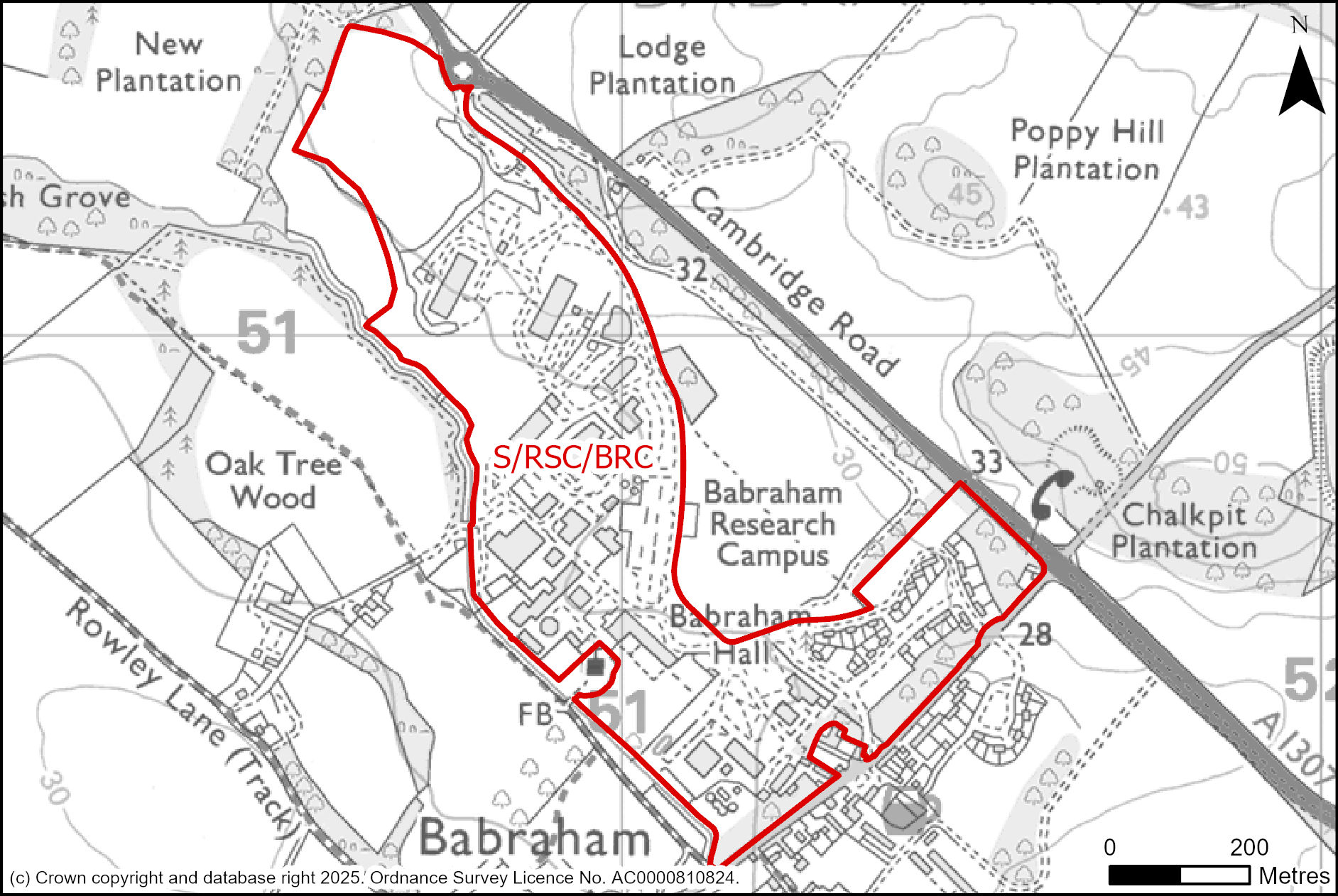
12. Ensure the built area of the settlement is contained within the site allocation boundary shown on the policies map and the Spatial Framework Diagram. Context
13. Be comprehensively planned and delivered to ensure development proposals are fully integrated with the wider Campus and to preserve and enhance the setting of identified heritage assets. This must involve:
a. Preparing a site-wide Masterplan, which must be submitted for approval by the Local Planning Authority as part of the first application for planning permission;
b. Preparing Design Codes for each phase of development to ensure a high quality of development, which must be submitted and approved before the first reserved matters planning application is determined.
Nature
14. Maintain and enhance the wider landscape, including the corridor of the River Granta.
15. Deliver compensatory improvements to the environmental quality and accessibility of remaining Green Belt land in the Strategic Enhancement Area (S/SEA/BRC), in line with a Green Belt Enhancement Strategy for the area prepared by the applicant. This should:
a. include measures such as walking loops, new wetlands, restoration of ponds, and other associated green infrastructure projects;
b. incorporate the enhancement of existing hedgerows and woodland that form the boundaries of the site, particularly to the east and west;
c. ensure measures integrate with the green and blue infrastructure network across the site and in the wider area.
Movement
16. Ensure proposals improve movement within the Campus and deliver connections to high-quality sustainable transport, by:
a. securing improvements to pedestrian and cycle routes;
b. supporting the provision of high-quality routes to existing forms of public transport, including nearby bus-stops;
c. providing high quality local non-motorised routes linking to Cambridge South East Transport schemes.
17. Where required, contribute financially to strategic public transport and active travel schemes in the south-east corridor, appropriate to the scale and nature of the development.
18. A trip budget based on detailed evidence must be agreed with the Local Highways Authority prior to submission of the outline application. A monitor and manage approach will be taken to ensure that the development remains within the agreed trip budget for the site throughout its delivery.
19. To support delivery of the agreed campus-wide masterplan, a strategic and local transport mitigation plan must be prepared by the developer in consultation with the Local Highways Authority and Local Planning Authority.
The employment-led development must, additionally, do the following (in accordance with the Spatial Framework):
Uses
20. Support research and development (Class E(g)ii)) floorspace and supporting uses. Future development proposals will need to deliver spaces for start-ups, and these units should be located close to the centre of the site.
Built form
21. Be limited to the employment-led development area identified in the Spatial Framework.
22. Encourage opportunities for collaboration between future occupants, including delivering communal facilities on the ground floors.
23. Deliver active ground floor uses and frontages wherever possible.
24. Respond positively to the site’s immediate context, in particular heritage assets Grade I Listed St Peter’s Church, Grade II Listed Babraham Hall, and their setting, wider landscape character and identified key views, through the selection of massing, material palettes and overall design of new research and development buildings.
Public space
25. Include enhanced meeting places as part of the public realm and open spaces.
The residential-led development must, additionally, do the following (in accordance with the Spatial Framework):
Uses
26. Be limited to addressing the needs for campus worker housing, with the mix of typologies and tenures (including affordable housing) informed by an accommodation needs assessment for the campus, the Greater Cambridge Housing Strategy, and discussions with the Local Planning Authority.
27. Provide ancillary uses to meet the daily needs of residents, including a small shop, gym and childcare facility, which must be open to the wider public and not undermine the viability of existing services in the village.
Built form
28. Be located in the residential-led development area identified in the Spatial Framework.
29. Deliver active ground floor uses wherever possible.
30. Take a comprehensive, landscape-led approach to the design through the preparation of a Masterplan, which must be prepared by the applicant and submitted as part of the planning application for this part of the site. This must ensure development:
a. maintains the low-density character of the site;
b. secures building design which is sympathetic to the sensitive village-edge location; and
c. focuses development as near to the Babraham High Street as possible.
Supporting information
Overarching requirements
By removing the site from the Green Belt and setting clear requirements about the scale and type of development, this policy will co-ordinate future development proposals to ensure they deliver high-quality buildings and significant benefits for the local and national economy. Requiring all future development proposals to protect and enhance heritage assets will ensure their historical significance will be preserved for future generations. Allocating development in suitable areas of the Campus, maintaining key views and retaining and enhancing the existing tree coverage will mean that heritage assets and their setting are protected. Additionally, careful consideration of building heights, form and massing will mean that new development sensitively relates to its rich surroundings.
The policy stipulates that development proposals should maintain and enhance the wider landscape, including the River Granta, and provide substantial compensatory improvements to the environmental quality and accessibility to the Strategic Enhancement Area. These measures are important because they will support South Cambridgeshire District Council’s aim to improve biodiversity in the region. The Cambridge Green Belt Study (2021) identifies that the Campus makes a relatively limited contribution to Green Belt purposes, and the harm of its release would be low. The study highlighted that harm could be ameliorated by the enhancement of existing hedgerows and woodland that forms the boundaries of the site, particularly to the east and west. This would also help ensure that development enhances existing landscape features, including parkland features, and is in keeping with the wider wooded character of the Campus.
Support for continued growth of nationally important research campus meeting evidenced needs for additional space, provides justification for the exceptional circumstances required to release this land from the Green Belt, including providing policy support for key worker housing in this location. As a residential development on land formally in the Green Belt this would be subject to national planning policy’s ‘golden rules’, which would include 50% affordable housing.
The area adjoining the River Granta falls within flood zones. Masterplanning will need to respond to the appropriately, responding to requirements set out in the Local Plan.
By ensuring all development proposals improve movement within the Campus, the policy will help to improve the experience of people who currently use the Campus. Improving routes that connect the Campus with sustainable forms of public transportation, will mean that the policy helps to support the need to reduce carbon emissions in the local and wider area. Similarly, through providing contributions to public transportation schemes, future development will provide monetary contributions to deliver this wider aim.
Employment led development
Delivering research and development floorspace and supporting uses on this site will help a world-leading research campus to expand upon its current success. The policy requires world class facilities, including communal spaces, to foster collaboration and the sharing of ideas between employees. Similarly, delivering active ground floor uses will support the aim of making the Campus a vibrant area for people to work and visit.
Through carefully designing any future development, especially in relation to sensitive massing and materials, new development will contribute positively to the character of the site and surrounding area, and avoid negative visual impacts upon Cambridge’s Green Belt, Babraham Conservation Area and neighbouring properties. Similarly, by managing the height of new buildings, the development will not have a domineering effect upon its surroundings and instead will complement the wider context.
Residential led development
Requiring a landscape-masterplan to guide the regeneration of The Close will mean that new residential units sensitively complement their surroundings and do not have a negative impact upon nearby heritage assets or the village. The policy requires future housing to be informed by an accommodation needs assessment, ensuring that the provision of affordable housing is supported by rigorous analysis. Delivering supporting uses to meet the daily needs of residents will mean that the site will help to improve the quality of life for residents, nearby villagers, and general users of the Campus. Similarly, requesting that proposals deliver active ground floor uses will mean that the new residential development has a sense of vitality.
The residential development area proposed in a sensitive location, close to the Babraham Conservation Area and forming part of the setting of listed buildings. Development will therefore need to be carefully designed to optimise the use of land whilst protecting and, where possible, enhancing these assets and their setting.
Supporting topic paper and evidence studies
Greater Cambridge Local Plan Sites Topic Paper
Tell us what you think
We will consider all comments while developing the next version of the Local Plan.
All comments must be received by 30 January 2026 at 5pm.