What this policy does
The Cambridge Biomedical Campus is of national importance. This policy will guide development within the existing campus and also identifies land to be released from the Green Belt for a future phase. It establishes requirements for a new masterplan which will secure a coordinated approach to infrastructure, services and facilities to meet the needs of campus users, to ensure a campus which can deliver high quality local health services as well as complete internationally as a centre of research.
Policy S/CBC: Cambridge Biomedical Campus (including Addenbrooke's Hospital)
1. The Biomedical Campus including the land allocated for expansion through release of land from the Green Belt as shown on the Policies Map, is appropriate for a mix of uses which meet local, regional or national health care needs; or for biomedical and biotechnology research and development activities, related higher education, and sui generis medical research institutes. The Campus will include provision for additional campus worker homes and supporting services and facilities to support those that work, live, visit and pass through the Campus.
Vision and identity
2. The Cambridge Biomedical Campus will continue to evolve as a globally significant centre of healthcare, research and innovation, where clinical, academic and commercial activities collaborate seamlessly to improve lives. Anchored by Addenbrooke’s Hospital, the Campus will remain a nationally significant centre for specialised patient care while driving forward advances in life sciences that benefit communities locally, nationally and internationally.
3. As one of Europe’s largest centres for health, life sciences and clinical research, the Campus brings together a leading NHS teaching hospital, world-class academic institutions and a concentration of global life science businesses in a way rarely matched elsewhere. This close integration creates a unique advantage with the ability to rapidly translate discoveries into clinical practice and patient care. Future development will protect and strengthen this relationship, maximising opportunities to bring people together in a range of shared spaces and facilities to promote collaboration and foster an active, connected research community across the Campus. Ultimately, this will help to ensure the Campus continues to be a world- leading location for healthcare, education, medical innovation and life sciences research.
4. The Campus will also grow to form a vibrant and sustainable Cambridge neighbourhood, capitalising on its highly accessible location. It will be a high quality and vibrant place to live, visit and work. Further development will deliver high-quality buildings, spaces and infrastructure, including a range of on-site services and facilities, that reflect both its international importance and its strong connections to the wider city and sub-region by walking, cycling and high quality public transport.
5. The Campus will deliver a coherent and legible environment, utilising high-quality materials, landscaping and public realm that reflect the character of Cambridge and promote wellbeing, collaboration and innovation. Development will improve the navigability of the Campus and provide a range of services, facilities and green spaces that meet the needs of patients, staff, residents and visitors as well as being well integrated with surrounding neighbourhoods and the wider community. The Campus will include shared spaces promoting interaction between people across firms and sectors, promoting the sharing of ideas, where firms locating here are joining an active research community.
6. Excellence in placemaking, sustainability, health and wellbeing will underpin this approach, ensuring the Campus remains not only a cornerstone of the UK’s health and life sciences leadership, but also a positive and exemplary part of Cambridge’s future.
7. Areas to the south of the Campus in the Cambridge Green Belt will be enhanced to provide additional green space, landscaping and biodiversity improvements to mitigate the impact of development and enhance its wider setting.
Uses
8. Land at the Cambridge Biomedical Campus as shown on the Policies Map and indicative Spatial Framework, including land removed from the Green Belt adjoining Babraham Road, is allocated for a mix of uses contributing to health and life sciences, commercial and innovation floorspace, including:
a. Healthcare provision serving local to international needs, including new and updated NHS buildings and supporting clinical infrastructure;
b. Biomedical, biotechnology and life sciences research and development, including academic institutions and medical research institutes;
c. Higher education and training facilities supporting the development and retention of healthcare related skills and talent;
d. Capacity for approximately 1,000 additional homes on the campus;
e. Approximately 687,000 net additional square metres (Gross Internal Area) of research and development floorspace (use class E(g)(ii)) specifically related to biomedical and biotechnology uses and clinical healthcare and hospital facilities.
9. Development proposals must make a positive and meaningful contribution to it becoming a world leading healthcare, life-science and educational cluster.
10. Given the range of existing and proposed uses and the 24 hour nature of the Campus, a comprehensive amenity strategy is required to achieve a thriving and world leading place. Supportive and ancillary uses such as hotels, conference centres, nurseries, sports, leisure, food and beverage, convenience retail, community gardens and food-growing spaces are required to achieve this, and proposals will need to:
a. Support the needs of the campus users throughout the day and night;
b. Provide services and facilities which are appropriately located across the Campus, in particular at key areas of activity, to reduce the need for people to travel;
c. Ensure they do not compromise the operational needs of the Campus;
d. Enhance the vibrancy of the Campus and the visitor, patient and employee experience
11. To support the housing needs of those working on the Campus, the redevelopment and intensification of plots within the existing Campus for residential uses will be supported where they:
e. Primarily serve CUH/NHS campus workers including medical students. Short term accommodation for patients and/or their families or for non-CUH/NHS campus workers may be acceptable where this is not prioritised or over provided relative to CUH/NHS accommodation;
f. Provide opportunities for co-living, supporting community cohesion;
g. Support campus vitality, with appropriate design;
h. Provide necessary services and infrastructure that are within close proximity;
i. Do not compromise healthcare operations or clinical safety.
12. Applications for development will also be supported for:
j. The progressive renewal of NHS estate buildings;
k. The delivery of infrastructure to support hospital operations including helipad for the East Anglian Air Ambulance;
h. Mixed use buildings that include incubator spaces to support research and development (class E(g)ii) floorspace and supporting uses.
The development of Cambridge Biomedical Campus must do the following:
Context
13. Ensure the built area of the Campus is contained within the Site Allocation boundary identified on the Policies Map. Beyond this, other associated uses and mitigation may be provided in the Strategic Enhancement Area, including drainage, habitat compensation and, in appropriate locations, open space.
14. Adopt a design-led approach to the planning and design of further development at the Campus ensuring its setting within Cambridge’s urban and rural edge is respected. To achieve this, development must align with the Spatial Framework for the Campus and must also:
a. Integrate sensitively with adjoining residential neighbourhoods, the wider Green Belt, and countryside to the south, ensuring appropriate transitions in height, scale, and landscaping;
b. Retain and enhance key strategic and local views and landscape features, especially from Nine Wells Local Nature Reserve, Magog Down and wider countryside approaches; and
c. Contribute positively to the setting of designated and locally listed heritage assets and enhance the interface between the built form and its natural context; and
d. Respect the operational needs of existing NHS and institutional facilities and mitigate any adverse impacts on surrounding communities.
15. To maximise the potential for collaboration and ingenuity across the Campus, proposals for shared infrastructure, including affordable lab space, innovation hubs and accommodation that promotes inclusion and affordability, will be supported.
Built form
16. Respect and enhance local landscape, townscape and heritage and adopt principles of high quality design by:
a. Aligning with design principles that respond to local character and the city’s townscape, using varied building forms and typologies to deliver high design quality, architectural features and materials;
b. Where appropriate, providing active ground floor uses to activate streets, spaces and communal areas;
c. Supporting appropriately sited taller buildings where they enhance legibility, mark key destinations, and do not adversely impact sensitive views, heritage assets and their setting or neighbouring communities;
d. Prioritising the retrofit and reuse of buildings, especially where they are of heritage or operational value;
e. Achieving high standards of energy and environmental performance, including climate resilience;
f. Responding sensitively to adjoining Green Belt and residential areas through scale transitions and soft landscaping buffers;
g. Ensuring boundary treatments, lighting, servicing and operational layouts are designed to minimise negative impacts and contribute to the overall public realm.
Nature
17. Establish a strong, varied and well connected framework of accessible green infrastructure optimising biodiversity value and integrating nature-rich open spaces and ecological corridors throughout the site. The design of such spaces must ensure:
a. delivery of biodiversity enhancements, while accommodating appropriate amenity, recreation, and wellbeing functions;
b. habitat features are, where possible, embedded within development parcels, enhancing the southern green edge and providing multifunctional landscapes that balance ecological protection with informal play, sport, and relaxation, supporting both campus users and the surrounding community;
c. existing agricultural, grassland and woodland habitats are enhanced, improving ecological links between Nine Wells LNR and Gog Magog Hills;
d. provision of a well vegetated landscape buffer within the Strategic Enhancement Area (S/SEA/CBC) to the south of the campus that responds positively and sensitively to the existing topography and habitats, including planting of native species, wetlands, woodland and hedgerows.
18. Proposals in the Landscape Improvement Area must:
a. Create and/or enhance existing ecological corridors between the nature reserves of Nine Wells and Beechwoods;
b. Establish high quality active travel routes from Limekiln Road into the southern end of the Campus;
c. Incorporate natural drainage features which specifically addresses surface water flood risk associated with the expansion land north of Granham’s Road.
Public space
19. Provide a network of world class, coherent, well-designed and high-quality public and communal spaces, taking a holistic Campus wide approach to ensure a range of user needs are addressed, including amenity spaces for employees and visitors and spaces and facilities to support accelerated patient recovery, and to maximise delivery of complementary biodiversity enhancements. This will be achieved by provision of:
a. A well-connected network of open spaces, squares and courtyards, all within walking distance of campus users, that are proportional in size and function to the number of people working, visiting or passing through these areas;
b. Safe, inclusive and accessible public spaces that can be used at any time;
c. Coherent signage to improve wayfinding and legibility, including within buildings, helping to create a sense of place;
d. Accessible spaces to promote wellbeing, social interaction and collaboration; and
e. Carefully landscaped campus edges to create a green transition to from the city to the surrounding countryside, integrating the Campus with its surroundings, helping to reduce the visual and operational impact, and supporting the setting of Nine Wells and the Green Belt.
Movement
20. Deliver an exemplar approach to movement and transport within and through the site, promoting sustainable, inclusive access by:
a. Prioritising walking, cycling, and public transport as the primary means of access with legible high quality street network in accordance with Healthy Streets guidance and National Design Guidance;
b. Delivering a safe, legible and accessible internal movement network, with a clear active travel hierarchy and infrastructure improvements to key routes including Francis Crick Avenue, Dame Mary Archer Way, Robinson Way and Puddicombe Way;
c. Providing enhanced access to Cambridge South Station through a new east-west ‘high street’ for active travel and buses and a mobility hub adjacent to the station;
d. Providing sufficient capacity to accommodate travel improvements and connectivity to existing nearby Park and Ride sites at Babraham Road, Trumpington Road and other travel hubs;
e. Incorporating delivery through last-mile logistics including dynamic kerbside management and future technologies;
f. Enabling new multi-modal access from a realigned Granham’s Road to relieve congestion on Babraham Road and Hills Road whilst introducing a modal filter south of Dame Mary Archer Way to prevent the rat running of private vehicles through the Campus;
g. Consolidating car parking into mobility hubs, limiting new surface parking, and providing high-quality cycle parking, shared mobility infrastructure, and accessible transport for all users;
h. Ensuring blue light routes maintain prioritised access to key hospital departments;
i. Implementing data capture devices such as Automatic Number Plate Recognition (ANPR) that can monitor freight activity across the campus, allowing for the analysis of impacts of freight, and to support a policy framework that optimises freight activity as the campus expands; and
j. Implementing a monitored and enforceable peak-hour trip budget, supported by demand management measures and high-quality mobility services such as employee-specific buses, that prioritises modal shift and monitors ongoing performance.
21. A revised trip budget based on detailed evidence must be agreed with the Local Highways Authority prior to planning applications for further development. The current agreed trip budget for the Campus is 2,800 arrivals and 850 departures in the AM peak, and 850 arrivals and 2,400 departures in the PM peak. A monitor and manage approach will be taken to ensure that the development remains within the agreed trip budget for the site throughout its delivery.
22. To support delivery of the agreed campus-wide masterplan, a strategic and local transport mitigation plan must be prepared by the developer in consultation with the Local Highways Authority and Local Planning Authority. This must include:
a. Sustainable transport measures;
b. Indicative costings;
c. Phasing; and
d. Potential delivery via a Section 106 agreement or CIL.
Resources
23. Utilise innovative approaches to water management on-site, including sustainable drainage systems (SuDS), water reuse and natural systems and landscaped solutions as appropriate, to help address flood risk, including surface water, foul drainage and sewage disposal, and maximise the sustainability of the Campus.
24. Contribute to the efficient use of resources and the long-term sustainability of the campus by incorporating other low-carbon energy infrastructure and circular economy principles wherever possible.
25. Planning for necessary services, facilities and infrastructure, identified in the Amenity Strategy and Infrastructure Delivery Strategy, must be undertaken in a comprehensive manner, ensuring their timely and efficient delivery to avoid overburdening existing services, and in particular prioritising early delivery of green infrastructure, sustainable transport links and essential utilities.
Lifespan
26. Further phases of major development at Cambridge Biomedical Campus, including the further extension to the south, must be planned and delivered in a comprehensive and coordinated manner to ensure the vision for the site is successfully achieved, contributing to the long-term, coordinated evolution of the Campus through a comprehensive and enforceable spatial approach.
27. There are a range of matters that will need to be fully addressed before further development will be supported. To address these, the applicant must prepare and submit, for approval as part of future outline planning applications:
a. A comprehensive campus-wide masterplan which addresses key requirements, such as access and movement, land uses, green and blue infrastructure, scale and massing and densities;
b. Evidence to demonstrate an understanding of the cumulative needs of people working, visiting and living on the campus, and the infrastructure, services and facilities necessary to deliver a world leading campus, and how these needs will be met, including proposed phasing and funding approach;
c. Full phasing plans, including any further planned development or redevelopment in early phases of the Campus;
d. A business case for a phased approach to achieving opportunities for long-term and wider collaboration for delivering freight and logistics across the campus and through an off-site micro-consolidation and logistics hub;
e. An Infrastructure Delivery Strategy, identifying required site-specific and strategic infrastructure requirements to help achieve the vision for the Campus as well as wider Campus enhancement set out in the Spatial Framework, and demonstrating how this can be successfully funded and delivered through enforceable mechanisms for the coordinated and phased development of the Campus. It must identify appropriate triggers to ensure the timely provision of infrastructure to align with development phasing;
f. Clear and enforceable strategies for delivery, management and stewardship of shared facilities and public realm;
g. A Community Engagement Strategy, maintained and submitted alongside future planning applications to meaningfully enable local people and stakeholders to inform site wide and phase/neighbourhood specific proposals;
h. Where appropriate, a Meanwhile Strategy, identifying opportunities for the meanwhile use of buildings, facilities and other spaces to make efficient use of land while it is awaiting longer-term development.
28. Applications for full planning permission and/or reserved matters applications must be supported by subsequent parameter plans, phase or plot specific masterplans and design codes, to ensure different phases of development integrate seamlessly and contribute positively to the overall design quality. In part, this should be informed by a Landscape Visual Impact Appraisal and Heritage Impact Assessment.
Supporting information
The spatial framework for the Cambridge Biomedical Campus sets out an indicative high-level illustration of the policy requirements and the key interventions required to deliver a world leading life science Campus.
Cambridge Biomedical Campus is a location of national and international importance for life sciences, biomedical and healthcare research and development. It plays a critical role in providing and innovating medical care and services across local, regional and national contexts. The site brings together NHS services, world-leading academic research, medical innovation, and commercial life sciences in a single, integrated environment. As such, it represents a vital economic and social asset not only for Greater Cambridge, but for the country as a whole.
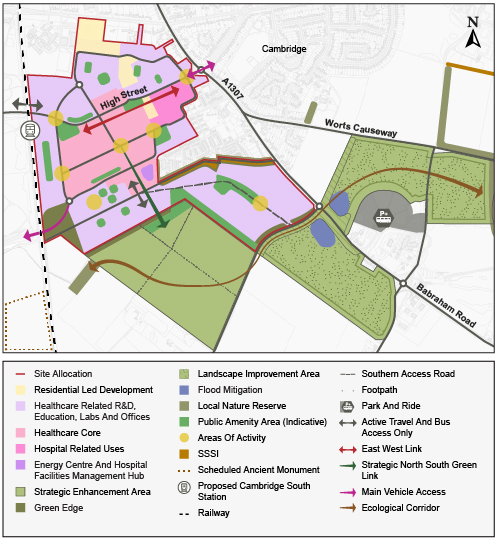
This policy is required to enable the continued evolution of the site whilst ensuring that high quality, sustainable and well-designed development is delivered across the campus. It sets out clear expectations for placemaking, design quality, sustainability and coordination, recognising the opportunity to deliver an exemplar development that reflects the strategic significance of the Campus. The policy supports the continued evolution of the site into a world-class environment for healthcare and innovation, where collaborative working between institutions, businesses and clinicians can thrive, and where patients, staff, researchers, students, campus residents and visitors can benefit from a functional, inclusive and vibrant setting. It also establishes a positive approach for additional campus worker and patient related housing on the Campus, noting the significant number of employees across the site and the wider housing pressures in the area.
The Campus has developed in phases, with Phase 2 (south of Dame Mary Archer Way) currently under construction. A third phase, south of the phase 2 land, was allocated through the South Cambridgeshire Local Plan 2018, but planning permission has yet to be granted for development. A Cambridge Biomedical Campus Supplementary Planning Document was prepared to supplement the adopted Local Plan policies, in April 2025, to guide proposals for development coming forward in the short term. However, there remain several challenges that must be addressed as part of future growth. The existing Campus layout, legibility and green space must be improved, and there is limited range of amenities to support the day-to-day needs of visitors. Future masterplans need to address these shortcomings if the site is to deliver a world leading Campus.
Many of the older buildings on the Campus are now in need of renewal or improvement. The progressive renewal and updating of the NHS buildings on the estate is supported, in order to meet growing healthcare requirements, enhance patient care, and create a better environment for patients, staff and visitors in the heart of the campus. This includes not only clinical buildings but also the ancillary infrastructure necessary to support the safe and efficient operation of hospitals and other facilities on the campus.
The draft Local Plan identifies release of an area of around 22 hectares of land from the Green Belt to meet future needs of the campus and to enable improvement of the existing campus. This land adjoins Babraham Road and is north of a realigned Granham’s Road. The realignment of the road will allow improved access into the campus, and development of a comprehensive landscape response to the edge of the city alongside the developments happening a Worts Causeway.
Given the importance of the Campus both the local and national economy, and in its role in meeting the health needs of the region, it is considered that there are exceptional circumstances for this Green Belt release. However, development of this land is dependent on demonstration of how it will be part of a single coordinated masterplan for the whole site, that it will help deliver the infrastructure the campus needs to serve visitors and staff and that it will enable improvement of the wider campus to deliver a world class hub of innovation and healthcare.
A key purpose of the policy is to enable a coordinated approach to the completion of the existing campus and support its further expansion. The approach prioritises integration between new development and existing facilities, ensuring that growth is not piecemeal, but strategically planned and delivered. New development must incorporate the operational needs of institutions on site while also enhancing the overall quality, accessibility and functionality on Campus.
The Campus’ location on the edge of Cambridge presents both opportunities and responsibilities. Development must respect the urban-rural transition, ensuring that the Campus integrates positively with surrounding residential areas, the wider countryside, and key environmental assets such as Nine Wells Local Nature Reserve, the Gog Magog Hills and Beechwoods Nature Reserve. The southern part of the allocation includes Green Belt land that will be used to deliver high-quality green infrastructure and biodiversity enhancements. These measures will improve the setting of the Campus, support ecological networks, and provide new opportunities for recreation and wellbeing, while helping to mitigate the environmental impacts of growth. The enhancement of agricultural, grassland and woodland habitats, the creation of ecological corridors, and the restoration of farmland species are essential components of this strategy.
Development must deliver a network of inclusive, well-landscaped and connected public spaces, including courtyards, paths and amenity areas that encourage social interaction, support mental and physical wellbeing, and reflect the distinctive character of Cambridge. Particular attention will be required at the edges of the Campus, where carefully designed transitions must ensure the built environment integrates sensitively with neighbouring communities and natural features. The setting of Nine Wells will be protected and enhanced through appropriate setbacks, landscape buffers and biodiversity improvements.
The policy introduces a monitored and enforceable trip budget to ensure that movements are limited and that a genuine shift toward sustainable transport modes is delivered. The future success of the Campus is dependent on improving access for all users while reducing traffic impacts on surrounding roads and communities. Walking, cycling, and public transport will be the primary modes of access, supported by a coherent and legible network of routes within the site. Key movement corridors such as Francis Crick Avenue and Dame Mary Archer Way will be upgraded, while new infrastructure including an east-west ’high street’ and mobility hubs will support multi- modal access. Enhanced connectivity with Cambridge South Station and integration of the proposed CSET scheme will help reduce car dependency, and micro-consolidation hubs will support efficient, low-impact logistics for last-mile deliveries.
Given the complexity of the Campus and the scale of infrastructure required to support growth, development will need to be phased and delivered in a coordinated manner. This must be supported by an Infrastructure Delivery Plan identifying the strategic infrastructure and enhancements required to support the Campus' evolution and how and when they will be delivered. Recognising the importance of implementation, the policy is contingent on the identification and agreement of a delivery body capable of managing the delivery of infrastructure and securing the long-term stewardship of shared facilities and public spaces.
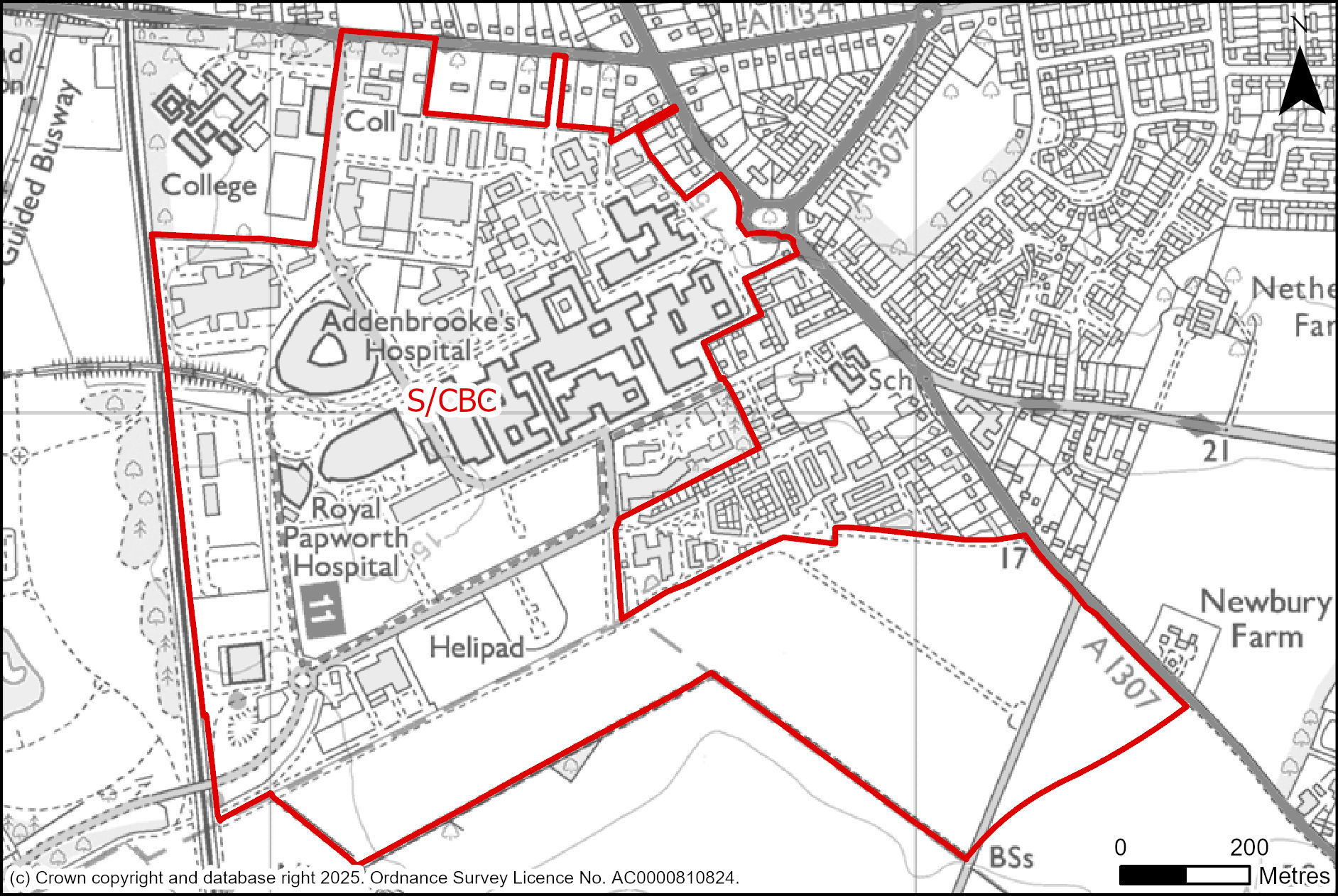
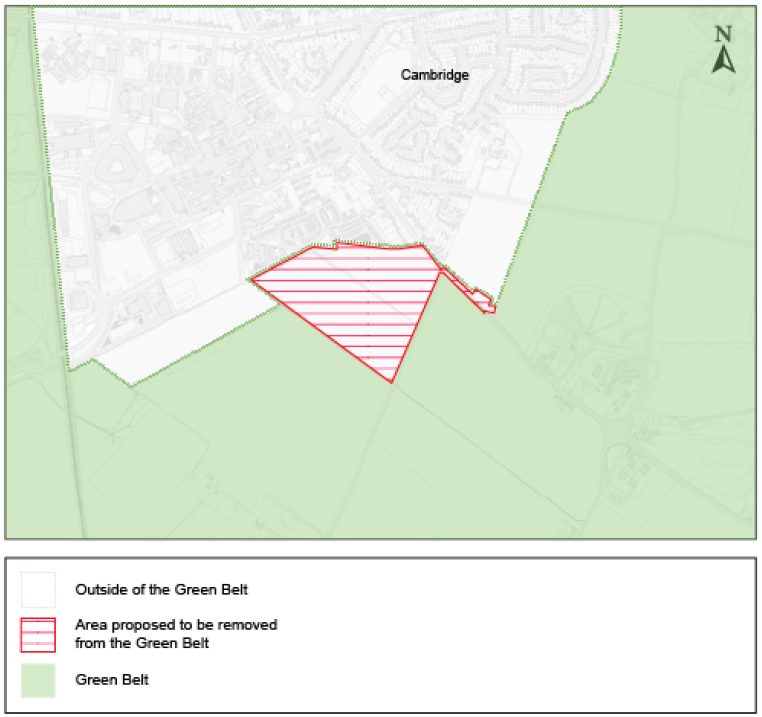
Applications for small-scale development or those already granted consent will not be required to comply with the full Spatial Framework but must still demonstrate consistency with the Campus-wide criteria set out in the policy. Early delivery of key infrastructure, including green space, transport links and utilities, will be critical to avoiding pressure on existing services and ensuring that new development supports the long-term functionality and resilience of the Campus.
Supporting topic paper and evidence studies
- Greater Cambridge Local Plan: Strategy Topic Paper
- Greater Cambridge Local Plan: Sites Topic Paper
- Housing and Economic Land Availability Assessment (2025)
- Greater Cambridge Employment Land Review & Economic Development Evidence Base (2020)
- Heritage Impact Assessment (2025)
Tell us what you think
We will consider all comments while developing the next version of the Local Plan.
All comments must be received by 30 January 2026 at 5pm.