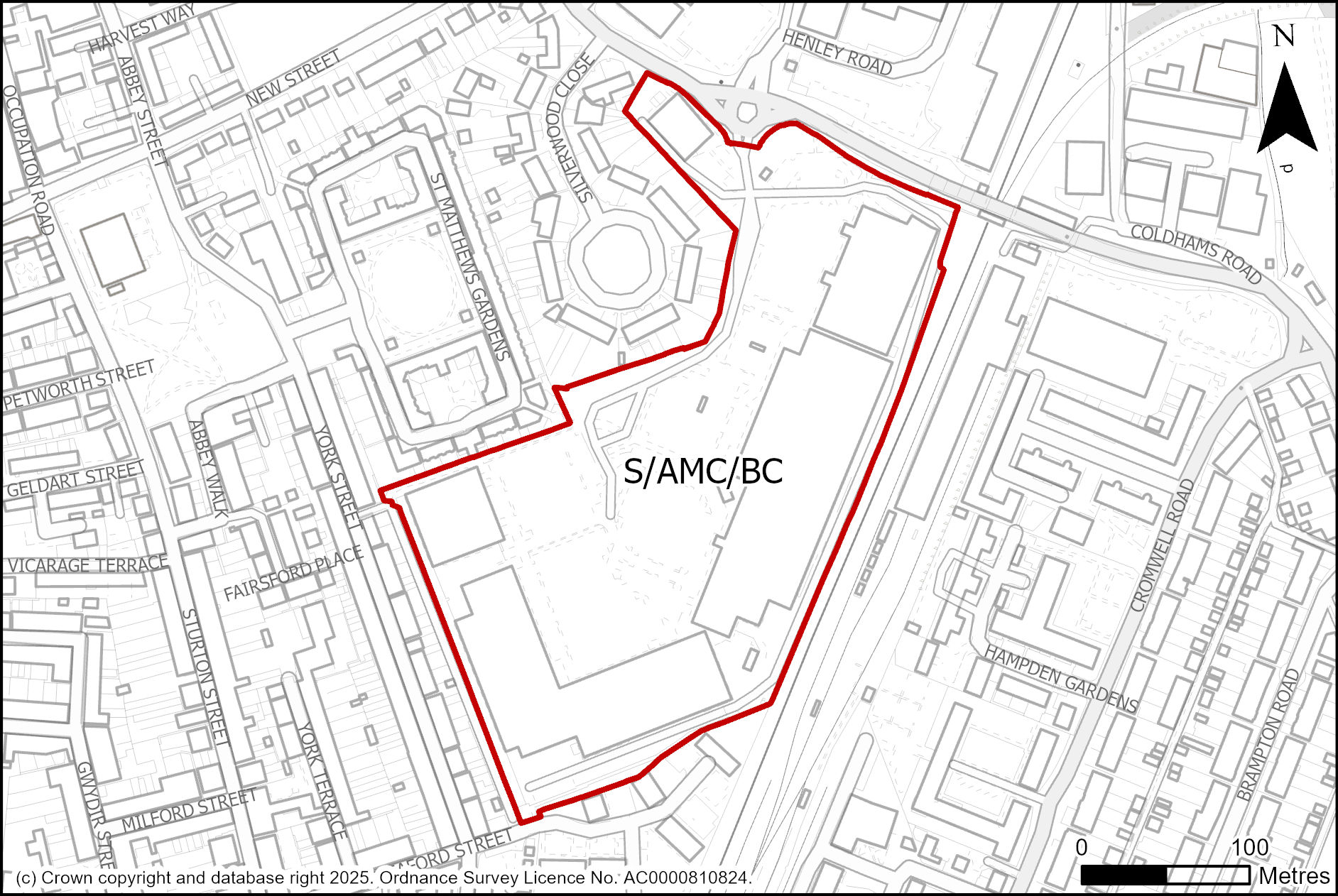
1. Development proposals across this policy area, will be supported if they:
a. create a positive, balanced and attractive environment, to support the vitality and viability of this area;
b. integrate positively with both the adjacent Cambridge Retail Park (Policy S/PRIA/CRP) and the surrounding neighbourhoods;
c. support the delivery of public realm improvements, adopting an integrated approach towards public realm and streetscape design, linked to adjacent development proposals;
d. support character enhancements with improved connections and facilities for both pedestrians and cyclists to help reduce vehicular congestion; and
e. support both pedestrian and cyclist movements through the site and with connections to adjacent development sites, designed to ensure safety for all surface users and improved management of servicing, subject to further discussion with the Transport Authority, where applicable.
2. Any proposals to reconfigure the retail park to provide alternative uses must include:
a. an overarching development and environmental strategy framework to guide the site’s re-configuration over the short, medium and long-term;
b. a material improvement in the quality of the site’s environment and public realm to support the overall vitality and viability of the area. This should include providing external plant equipment to support outdoor cultural activities.
3. Where feasible, proposals should:
a. create better east-west and north-south connections, improving the area’s links with the surrounding neighbourhoods;
b. create a more permeable and legible network for pedestrians and cyclists, Proposals should establish a clear hierarchy of routes for pedestrians, cyclists and private motor vehicles including an integrated approach to the management of servicing in the short and long term; and
c. provide a movement strategy integrating with any proposals the Greater Cambridge Partnership may have for the wider area.
4. An urban design led approach should be taken to inform the appropriate scale and massing of development proposals in the policy area. Studies will also be required to justify proposed land uses floorspaces and their redevelopment on a proposal-by- proposal basis.
Supporting information
The former Beehive Centre area provides an important edge-of-centre brownfield site for intensification for a range of uses that complement the adjacent residential and retail park uses. This reconfiguration and intensification of uses affords the site many opportunities to improve its accessibility within the site and beyond, including access to Cambridge Retail Park which should be maximised to encourage the use of sustainable forms of transport to access the area and help reduce vehicular congestion. The area’s long-term strategy is also expected to improve the area’s environment and appeal for residents, local workers and visitors from further afield.
The site offers a range of short-to-medium term development opportunities with specific site-intensification proposals along with more long-term comprehensive redevelopment.
All short-to-medium proposals should have regard for the site’s long-term ambition. Relevant public realm, landscape, movement and servicing strategies should consider how these have regard for these progressive stages and remain consistent with the area’s agreed overarching development and environmental strategy framework, to ensure a cohesive approach to the site’s comprehensive redevelopment.
Opportunities to improve the area’s cultural offerings should have regard to the provision of the necessary cultural infrastructure such as outdoor lighting, public seating, toilets and access to water and electricity for temporary cultural events. A cultural strategy should also be considered for the area to support these activities.
Tell us what you think
We will consider all comments while developing the next version of the Local Plan.
All comments must be received by 30 January 2026 at 5pm.