What this policy does
This new strategic site sets out the proposed approach to the further expansion of Cambourne, taking account of the significant planned improvements to public transport in this area.
The expansion of Cambourne will be developed during the period of the new Local Plan and beyond.
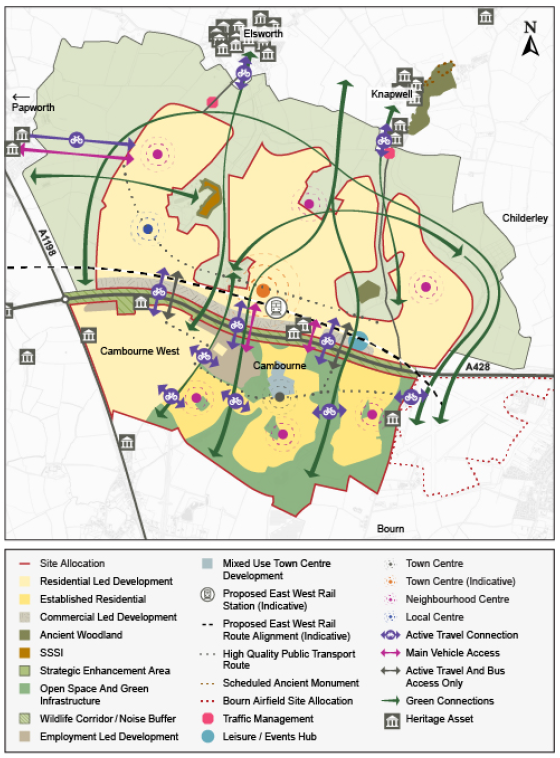
The proposed Cambourne North site sits alongside the S/SEA/CBN Non-development areas adjacent to Cambourne North Strategic Enhancement Area. This area will ensure sufficient separation between neighbouring settlements and maintains a soft, green landscape to enhance the wider rural setting. These areas may also be used to deliver other associated uses, including drainage, habitat compensation and informal open space.
Policy S/CBN: Cambourne North
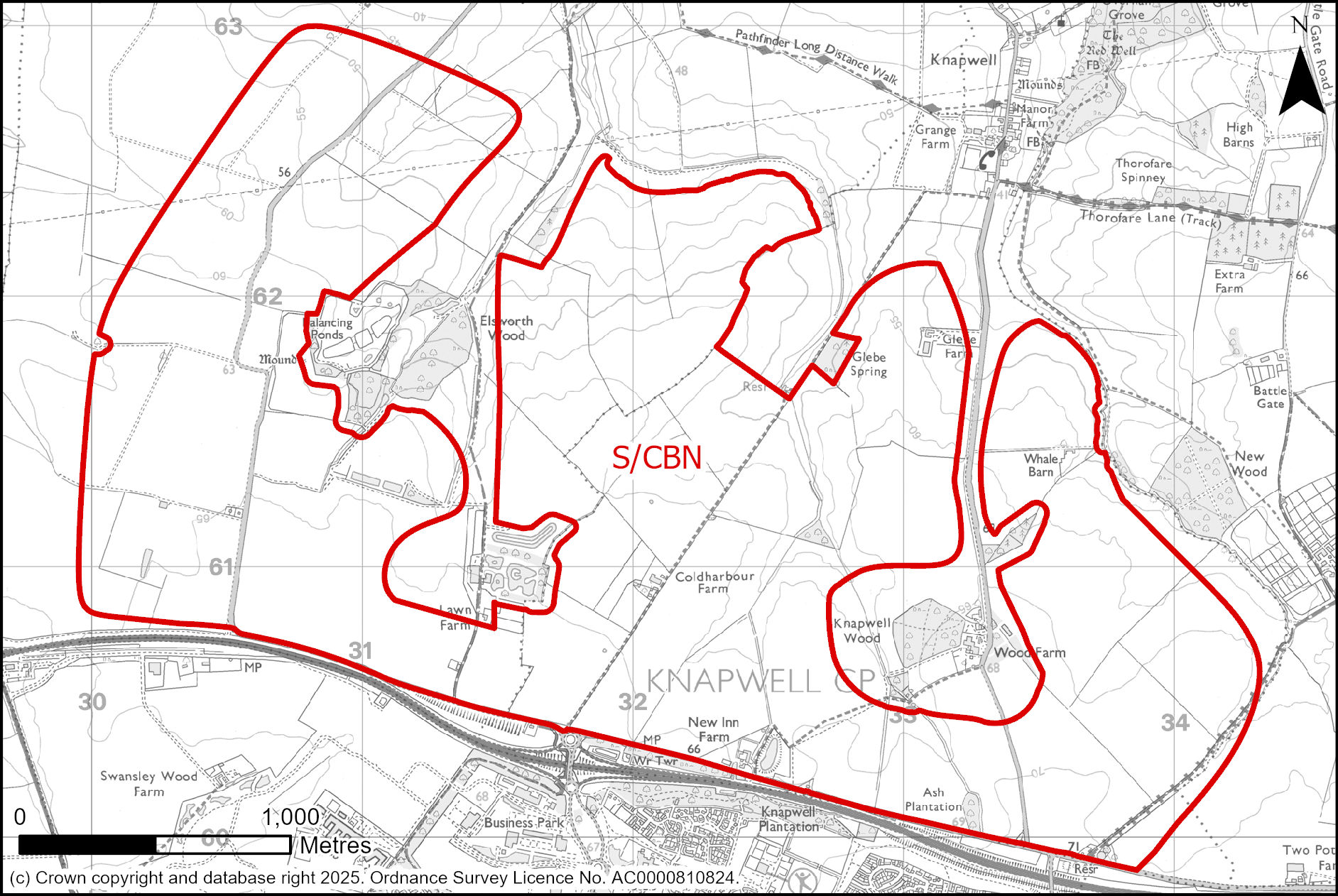
1. An expansion of approximately 13,000 homes, 108,000 square metres gross internal area (GIA) of employment floorspace, with a range of supporting services and facilities including retail, community, cultural, faith, leisure, education and sports and open space uses. The built area of the expansion will be contained within the Site Allocation boundary identified on the Policies Map.
Vision and identity
2. Cambourne North will become an integrated part of Cambourne, a well-connected, sustainable, thriving and prosperous town that is rooted in nature. It will be a fantastic place to live, work or visit, where everyone within the town will have easy access to a wealth of employment opportunities, services and facilities.
3. Through the new railway station being delivered by the East West Rail project and the Cambourne to Cambridge (CtoC) Guided Busway, Cambourne will become a destination in its own right with facilities and open spaces of sub-regional significance, including a cultural hub and performance space, new leisure hub and northern forest.
4. The new station interchange will be a focal point for Cambourne North, providing a range of facilities and acting as a new gateway to the town. The station should have a dual role as a catalyst for the expanded community at North Cambourne and for connectivity and employment to the south of the railway. It will be supported by a network of neighbourhood centres that provide people with access to day to day services and facilities on their doorstep, complemented by public spaces for intergenerational communities to gather and set within a green network of open spaces and natural habitats.
5. The development will incorporate a series of sustainable neighbourhoods, each of which will have a distinct sense of place and community through innovative urban design. Homes, public and private spaces and local facilities will be designed to foster health and sustainability, accommodating people at all stages of life and with diverse needs. The town will benefit from well-considered, distinctive and contemporary design, which through the design of the buildings and public spaces will create a place that is memorable and outstanding across all aspects of placemaking.
6. Cambourne North will be a destination for new jobs through the creation of a new multi-sector employment cluster, with a particular focus on jobs that are complementary to those in the wider region, such as mid-tech industries.
7. Critical to the overall success of the town will be the integration of Cambourne North with the existing town and High Street, addressing potential barriers to movement, including the A428 and proposed East West Rail route, though a comprehensive movement network for walking and cycling, including a series of new connections and improvements to the public realm. These will deliver seamless, legible and safe movement of people across the wider town and, together with emerging sustainable transport connections, will support a wider reduction in reliance on private vehicles for local and sub-regional journeys. The emerging transport schemes and improvements to walking and cycling networks should also be designed to benefit to the existing town,
8. Cambourne North contains and is close to a number of nationally significant ecological and historic assets, including Ancient Woodlands, County Wildlife Sites, and an extensive network of archaeological remains and features. The future layout of the town will consider these assets, identifying and implementing measures that mitigate any impacts but also deliver enhancement wherever possible, including creating an extensive network of ecological corridors.
Uses
9. The site is allocated for mixed-use development comprising:
a. A range of homes with a balanced mix of dwelling sizes, types, and tenures based on identified existing and future local needs, including affordable housing and homes to accommodate people at all stages of life to achieve a balanced and inclusive community, including:
i. 10% of the dwellings as specialist accommodation (within use classes C2 or C3), particularly for older people or those with disabilities; and
ii. a total of 24 permanent Gypsy and Traveller pitches (within two sites of 12 pitches, each on approximately 1 hectare of land).
b. At least 24 ha employment provision of type and mix to meet the needs of the town and provide access to local jobs and support the continued development of the economy of the Greater Cambridge area;
c. Community services and facilities, including health, culture, at least three dedicated faith spaces, primary and secondary schools, and local spaces available for small scale independent retail and/or community uses;
d. Open space, sports and leisure facilities, including a new regionally significant leisure, recreation and events centre and associated playing fields located between the A428 and East West Rail corridors;
10. To inform the overarching approach to land use, the applicant must:
a. Prepare an Intergenerational Housing Strategy in conjunction with key stakeholders, detailing how the site will provide diverse housing types and tenures to meet the needs of the community at all stages of life, including how residential buildings will be designed and delivered to allow for flexibility in response to the changing needs of residents;
b. Prepare a Place Activation, Culture and Events Strategy detailing the range of community, faith, cultural and other related uses to be accommodated in the design of public buildings and spaces. This must be prepared in conjunction with key stakeholders and set out a Stewardship Delivery Plan for long term operation and maintenance of these spaces;
c. Prepare an Employment Strategy to identify appropriate types and mix of employment uses and explore the co-location / stacking of employment uses with other uses, reduction of vehicular trips generated by employment uses and ensuring flexibility in employment space provision. This will be prepared in conjunction with the Local Authority’s economic development team and subsequently reviewed at each phase of the development;
d. Identify and deliver any improvements to existing infrastructure which will be relied upon by the expansion of Cambourne.
The development of North Cambourne must do the following:
Context
11. Embed exemplar principles of landscape, townscape and heritage protection and enhancement into all phases of masterplanning and design by:
a. Establishing a strong and robust landscape framework that integrates the development with the Strategic Enhancement Area (S/SEA/CBN) and the wider landscape context, informed through preparation of a comprehensive Landscape Strategy.
b. Creating a well-considered landscape buffer within the Strategic Enhancement Area which responds sensitively to the neighbouring villages and their Conservation Areas and delivers wider landscape and ecological mitigation and enhancement measures. The landscape buffer will:
i. Include the ‘Cambourne Forest’, a new, accessible, regionally -significant woodland arc (aligned to the District Natural Greenspace category in the Natural England Green Infrastructure Framework).
ii. Include areas of open agricultural fields, providing an appropriate context for the conservation areas to the north of the site and supporting farmland birds and other important species and habitats in this area, whilst avoiding the coalescence of Cambourne with Papworth Everard, Elsworth, Knapwell, Bourn Airfield New Village and Childerley.
iii. Require early, strategic consideration of local ecology through the design stages (aligned to the Local Nature Recovery Strategy) that will help to ensure biodiversity net gain can be fully met on site.
c. Undertaking a Historic Landscape Characterisation and Archaeological Assessment, Landscape Visual Impact Assessment and Heritage Impact Assessment to understand the impacts of development on landscape character, long range and local views and heritage assets and their setting, identifying appropriate mitigation measures that:
i. Provide a broad, well vegetated landscape buffer within the Strategic Enhancement Area, including naturalistic planting and tree lines that respond to topography and archaeological constraints;
ii. Incorporate areas of open, pastoral structured open spaces close to Elsworth and Papworth Everard to preserve their historic rural setting and sense of separation;
iii. Protect and, where possible, enhance the Grade II Listed New Inn Farmhouse and its barns on the southern edge of the Site as well as any non-designated heritage assets;
iv. Retain and enhance the immediate open landscape setting of the site, through a masterplan-led approach.
d. Undertaking both desk-based assessment and appropriate field evaluation of archaeological investigation, identifying appropriate mitigation in collaboration where significant remains are found;
e. Ensuring that major infrastructure is well integrated into the wider landscape and townscape, with nature-based solutions implemented wherever possible.
12. Avoid prejudicing the delivery of the preferred East West Rail route alignment and associated rail infrastructure.
Built form
13. Deliver a new Station Quarter and Town Centre, anchored by a new ‘living’ railway station, that will become the heart of the town extension. The design must:
a. Include a landmark railway station, based on design excellence which is an exemplar in embedding high quality placemaking principles outlined in the supporting Spatial Framework and Rail Integration Study, forming a key component of the Station Quarter, Cambourne North and the overall town and serving the needs of the wider area;
b. Avoid overprovision/inflexibility of space that would precipitate empty plots/units. Large retail floorplate buildings will not be supported where they create large inactive frontages and/or would result in the over dominance of a town, local or neighbourhood centre or the town overall;
c. Create active frontages through choice and positioning of uses, including small flexible units on the ground floor that are suitable for a range of uses to respond to market demand. These should be fine grain, wrapping and capping larger units with other uses and integrating a diverse range of occupiers.
14. Deliver a compact form of development, providing a mix of densities as appropriate to the area of the site, including:
a. Focusing the highest densities at the Station Quarter and Town Centre quarter at neighbourhood centres and at employment locations in areas within close walking and cycling distance of the new station;
b. Promoting higher density development for all employment sectors, including stacking of employment servicing and logistics infrastructure to enable greater density;
c. At residential neighbourhoods, incorporating corporate contemporary and innovative development of around 60-70dph.
15. Provide for a variety of building forms, scales, heights, massing and roofscapes, informed by Landscape Visual Impact, Heritage Impact and Historic Landscape Characterisation Assessments to ensure buildings are appropriately located and designed.
16. At residential neighbourhoods, ensure the design:
a. Provides a coherent built form, with consistent building lines, street frontages, and a scale that reinforces the character;
b. Incorporates complementary employment uses as appropriate, including co- working and spaces for self-employed people and small businesses.
17. At employment-led areas, ensure the design:
a. Provides a flexible range of mixed-use and employment spaces which respond to their immediate context: high street mix, strategic road network access, noise sensitivity and intensification of uses around the station;
b. Provides active frontages to the public realm at buildings and main entrances, which make a positive contribution to the street scene and wider placemaking objectives.
18. Incorporate a well-considered northern approach into the design of the town, that is sensitive to local townscape, landscape, strategic views and heritage assets and integrates well with the wider landscape character.
19. Across the site, embed necessary mitigation with regard to noise, light and odour, including from the A428, proposed railway including Station and recreational activities, to ensure no significant adverse impact on quality of life / amenity and health.
Public space
20. Deliver a new Town Centre and Station Quarter incorporating an associated mobility hub, a public square, new green streets, community spaces and a Cultural Hub, which complement the existing Cambourne Town Centre. Consistent with the principles set out in the Spatial Framework Strategy, this should:
a. Create a non-linear, appropriately sized, centre to act as a focus for retail, community and civic uses for the town. This should be segmented into multiple blocks to allow for further expansion;
b. Include a flexible cultural hub to anchor activity in the centre; the hub should include space to celebrate the archaeological assets of Cambourne and the wider area;
c. Be anchored at one end by the station quarter square and at the other by a smaller public open space with a more civic character. The Station Quarter square should be capable of supporting a regular market including the provision of the necessary market facilities for stall holders and visitors.
21. Deliver a network of clearly defined neighbourhood centres, each including a public play area and/or green space, and additionally providing for a range of co-located uses such as education provision, community spaces and/or facilities including faith spaces, food stores to meet day to day needs, cafés or public houses.
Nature
22. Protect, retain and enhance the statutory (Ancient Woodlands and SSSIs) and non- statutory (County Wildlife Sites) sites, including all designated woodland, and other local sites designated for their value to biodiversity. The development must:
a. Ensure that ancient Woodlands and SSSIs are kept free from public access to limit impacts of recreational disturbance;
b. Incorporate appropriate buffer zones between these environmentally and ecologically important sites and built form and areas of activity, which will need to be identified in the overall masterplan for the site;
c. Identify and deliver measures that minimise ecological pressures to these and other sites from domestic animals.
23. Positively plan for and deliver dark corridors to ensure nocturnal and crepuscular species can forage with minimum disturbance. The development must:
a. Keep lighting to a minimum, which where necessary should be directional and movement sensitive if appropriate;
b. Use bat surveys to inform detailed design of lighting strategy including buffer distances around woodlands;
c. Incorporate planed buffers with diverse species including those traditionally managed through coppice, as well as areas of scrub and natural regeneration. Buffers should be subject to appropriate positive management to maintain biodiversity value.
24. In considering connections between different designated and non-designated sites, prioritise retention of existing habitats and where protected species are shown to be present. Where retention is not possible, replacement habitat networks will need to connect designated sites and areas known to support protected species, such as barbastelle bats and great crested newts. The network – retained and extended – should, and be of sufficient quality to enable passage movement through the landscape unhindered, an important aspect of nature’s recovery and future resilience to climate change. These networks should be subject to appropriate positive management to maintain biodiversity value.
25. Retain and keep dark existing bat habitats including as broadleaved woodland, wet pasture and meadows, hedgerows, watercourses and waterbodies. Any replacement habitat intended to provide connectivity should include necessary mitigations to create dark conditions for the movement of Barbastelle bats between old growth woodlands where they may be roosting. Any likely significant losses of, or damage to (including light pollution), habitats and the network should be avoided and considered through appropriate assessment.
26. Where dark corridors cross necessary transport links, apply the following hierarchy:
a. Areas should be entirely unlit with connected canopy;
b. Where not possible, occasional use of minimal, directional and movement sensitive lighting;
c. A final option where routes require more frequent lighting, rationalised lighting schemes will employ best practice according to bat mitigation guidance.
27. Include buffers of at least 15m around existing (non-designated) woodlands and a minimum of 10m from all rivers and streams (though 20m is preferable where possible and appropriate to provide). These areas should also be informed by an appropriate site wide Lighting Strategy. Watercourses should be re-naturalised to enhance for biodiversity and increase potential for reducing flood risk as well as increasing resilience for a changing climate.
28. Provide and retain street trees, woods, hedges, and water features which would contribute to the character and amenity of the town, managed to enhance their ecological value in line with Urban Forestry principles.
29. Create strong active travel connections with new green infrastructure and open spaces to avoid recreational pressures on ancient woodlands and other protected and/or sensitive habitats and species.
30. Integrate blue and green infrastructure into the design of streets, including street trees and watercourses, providing places for people to interact with nature.
31. Consider the multifunctional value of spaces, e.g. amenity, landscape, biodiversity, recreation, flood mitigation and drainage where suitable and practical.
32. Provide adequate green infrastructure on site to provide Suitable Alternative Natural Greenspace (SANGs) (including the ‘Cambourne Forest’) to compensate for any additional recreation pressure created by the expansion of Cambourne on nearby SSSIs, including Overhall Grove and Elsworth Wood.
33. To inform the overarching approach to ecology and the environment, the applicant must:
a. Carry out a full programme of ecological survey and monitoring, to guide a Biodiversity Implementation and Management Plan and lighting strategy to provide appropriate mitigation and enhancement. This includes preparing site- specific ecological surveys to inform all phases of development, including strategic masterplanning, development of design detail (including dark corridors and dark buffers) and, where unavoidable impacts occur, appropriate mitigation;
b. Prepare an Ecological Masterplan for Cambourne and associated Stewardship Strategy in conjunction with key local and statutory stakeholders. The masterplan and strategy should detail how the expansion of Cambourne will positively contribute to the regional natural environment, including ensuring the delivery and stewardship of the ‘Cambourne Forest’;
c. Adopt a holistic approach to Cambourne’s environmental, economic and social sustainability should be adopted which provides effective responses to the climate and ecological emergencies. To aid this, the Cambourne Ecological Masterplan should be prepared to align with the Cambourne Climate and Sustainability Innovation Delivery Plan.
Movement
34. Deliver a comprehensive movement and connectivity network for the whole town connecting key locations including the new Station Quarter and Town Centre, neighbourhood centres, Cambourne High Street, other existing local centres and new East West Rail Station. The network design must:
a. actively encourage and prioritise the use of sustainable and active modes of travel;
b. identify the Station Quarter and Town Centre as the focus of the network ensuring it is highly accessible by modes other than public transport and acts as the interchange for walking, cycling, rail and bus connectivity;
c. consider connections across all parts of Cambourne and to surrounding villages, enabling all residents in Cambourne to reach employment locations, services and facilities using sustainable modes of transport.
35. Design new residential neighbourhoods to be walkable – where day-to-day services and amenities can be easily accessed by active travel or public transport. Employment-focused areas must ensure amenities, including local food and beverage, high quality public realm, leisure facilities and green space, are within walking distance to attract a highly skilled workforce and high quality employers.
36. In early phases of the development, deliver new and enhanced north-south connections which stitch existing and expanded Cambourne together to create one cohesive place, including a landmark ‘landbridge’ connecting Cambourne’s existing High Street with the new Station Quarter and Town Centre and key services and facilities.
37. Other measures to promote walking and cycling must include:
a. Provision of a network of attractive, direct, safe and convenient walking and cycling routes linking all homes to public transport and the main areas of activity such as the new Town Centre, Cambourne High Street, schools and employment areas;
b. Pedestrian and cycle improvements at two existing junctions on the A428 (at Cambourne and Caxton Gibbet) and the Broadway overbridge;
c. Improvements in walking and cycling links to surrounding villages so they are accessible throughout the day and evening and all year round;
d. Creation of strong active travel connections with new green infrastructure and open spaces to avoid recreational pressures on ancient woodlands and other protected and/or sensitive habitats and species.
38. Improvements to public transport must include:
a. Integration of the new East West Rail Station with appropriate access arrangements by all modes, facilitated by a mobility hub and high-quality active travel infrastructure connecting the station to centres, neighbourhoods and surrounding villages;
b. Integration of the Cambourne to Cambridge (CtoC) busway;
c. A primary bus corridor providing good connectivity across the Site and connecting to existing Camborne;
d. Improved local bus connections between Cambourne and Papworth Everard, Elsworth and Knapwell;
e. New dedicated bus, pedestrian and cycle bridges over the A428 and East West Rail to connect new development with the proposed Station and existing Cambourne;
f. Through engagement with developers at Cambourne West, deliver a new public transport and active travel bridge to the west of the A428 dumbbell roundabout.
39. Utilise localised logistics and micro-consolidation hubs to reduce number of local vehicular trips and minimise duplicated parking provision.
40. Parking measures must include:
a. In the residential areas, setting low parking ratios and optimise garden spaces/back-to-back and overlooking distances. Where parking courts are utilised, ensuring these are secure, well overlooked and integrate urban greening;
b. At employment-led areas, avoiding employee surface parking by providing off-plot parking for staff and visitors in the Station Quarter and Town Centre, enabling progressive management of parking provision and flexibility;
c. Optimised parking provision at the new station, with minimised provision across the wider Station Quarter and Town Centre, to support the achievement of the trip budget. Innovative measures to drive higher sustainable mode shares, trip internalisation and reduce vehicular trips will be supported;
d. Across the development, considering use of multi-storey mobility hubs and limited unallocated and flexible spaces to consolidate parking, enabling a more efficient use of space and encouraging active and sustainable travel for local journeys. Provision of high quality multi-storey hubs will be supported;
e. Avoiding surface car parking outside of the areas associated with the new station to support compact and walkable neighbourhoods.
41. Highway improvements must include:
a. New and, where necessary, enhanced pedestrian, cycle and vehicle crossings across the East West Rail route, including connections to the A1198 and St Neots Road (with the reprovision of existing road connections affected by the new railway delivered by East West Rail Co);
b. Appropriate traffic calming measures in surrounding villages to prevent ‘rat running’ and encourage sustainable travel, with exact measures to be identified through a Traffic Calming Study developed in conjunction with local communities. Development will not be supported where the necessary mitigation measures have not been delivered and, where appropriate, are enforceable.
42. All expansion proposals at Cambourne will be subject to a monitored and enforceable peak-hour vehicular trip budget. The indicative trip budget is approximately 2,500 trips in the AM peak and 2,500 trips in the PM peak. A refined trip budget based on more detailed evidence must be agreed with the Local Highways Authority prior to submission of the outline application. A monitor and manage approach will be taken to ensure that the development remains within the agreed trip budget for the site throughout its delivery.
43. To support delivery of the agreed masterplan, a strategic and local transport mitigation plan must be prepared by the developer in consultation with the Local Highways Authority and Local Planning Authority. This will include (but not be limited to) high-quality mobility services that prioritise modal shift and monitor ongoing performance.
Resources
44. To control known risks of flooding on-site to reduce the risk of flooding to areas downstream or upstream of the development, ensure the provision, management and on-going maintenance of sustainable surface water drainage measures, informed by the preparation of a Sustainable Drainage masterplan to reduce the rate of rainwater run-off whilst delivering benefits for biodiversity, water quality and amenity.
45. Prepare a Cambourne Climate and Sustainability Innovation Delivery Plan to inform the masterplan for the site, including detail of how the expansion of Cambourne will innovate on resource use, net zero and climate resilience through design and delivery of development (in line with the Cambourne Sustainability Framework).
46. Provide appropriate provision for and design of foul drainage and sewage disposal in line with the Climate and Sustainability Innovation Delivery Plan and a Foul Drainage Strategy, to be prepared by the applicant.
47. Provide appropriate provision for and design of waste and recycling management facilities, to be in line with the Climate and Sustainability Innovation Delivery Plan and a Street Space and Kerbside Strategy to be prepared by the applicant.
48. Cambourne North must be designed to:
a. minimise embodied carbon emission by embedding innovative and exemplary deep decarbonisation actions through design and construction, informed by regular whole life carbon assessments;
b. be net zero in operation, delivering a high-standard of energy efficiency and with 100% of site energy, being supplied through on-site renewable energy;
c. integrate circular economy principles into design (including Zero Avoidable Waste in construction, maximising opportunities for reuse and recycling of materials across whole life-cycle) and will encourage zero waste living in operation for future residents through provision of services and facilities;
d. maximise opportunities for food growing throughout the development, including within dedicated spaces and as part of the public realm;
e. meet high standards of water use efficiency and on-site water reuse, designed around community scale water recycling measures.
Lifespan
49. Delivery of Cambourne North, including any individual phases, must be in accordance with an approved phasing plan that must be submitted alongside the first planning application for the site, to ensure the expansion supports the creation of a fully functioning and successful town.
50. Planning for essential services, facilities and infrastructure must be undertaken in a comprehensive manner, anticipating future needs, and establishing suitable mechanisms to deliver the infrastructure in a timely and efficient way to achieve the successful delivery of the new town, including the needs of individual phases, and the requirements on developers.
51. The approach to the long-term management, maintenance and stewardship of the expansion of Cambourne, including its infrastructure, services and facilities, must be identified at the outset. An approach that enables community-led stewardship of Cambourne's new place assets should be strongly considered, reflecting the approach to management in the existing town and building on Cambourne's distinctive community spirit and collaborative culture. The stewardship approach must include the approach to funding and financing the management and maintenance of community assets and open space.
52. A Meanwhile Strategy must be prepared by the applicant to identify opportunities for the meanwhile use of sites for housing, employment and other uses, making efficient use of land while it is awaiting longer-term development.
53. An Engagement Strategy must be prepared by the applicant to meaningfully enable local people and stakeholders on site wide and phase/neighbourhood specific proposals.
Supporting information
National planning policy says that plan making should look to the opportunities provided by major new infrastructure. Cambourne has been identified as the location for a new East West Rail station. Since First Proposals plans for East West Rail have been further developed. A non-statutory consultation was held in 2024 and the Government has reaffirmed their commitment to deliver East West Rail. The proposed Cambourne to Cambridge busway scheme will also enhance the connectivity of Cambourne by public transport. The expansion of Cambourne provides the opportunity to bring forward development in a location which is accessible by sustainable modes, and at the same time support the existing town so that it becomes more sustainable and can offer the services and facilities of a modern town.
To ensure existing residents can realise the benefits of the new East West Rail station and other services and facilities provided as part of the expansion there must be convenient access between the existing settlement and the expansion area. The options appraisal process identified that expansion to the north of Cambourne provides the best alignment with transport connectivity and the best potential for growth.
The Spatial Framework Strategy describes the process to identify the extent of growth and capacity of Cambourne. Constraints were considered including flood risk, nature sites and habitats, and heritage assets. The extent of growth was then identified taking into account the ambition for growth to be landscape led and the need to reduce the visual impact of development as well as the need to create a buffer with surrounding villages. Through this process the broad extent of growth was identified.
A landscape buffer will be provided around the eastern, northern and western edges of the site to ensure that development responds sensitively to the neighbouring villages and wider landscape. The location of major land uses and design of the southern edge of the extension will ensure the expansion area is well integrated with the existing settlement. A number of objectives are also identified in the Spatial Framework Strategy, which provide the key characteristics for Cambourne’s expansion to be successful. Planning policy relevant elements of these objectives have been included in the policy wording.
The road network in South Cambridgeshire is reaching capacity, in particular roads into Cambridge. Therefore, high levels of sustainable mode share (percentage of trips using walking/cycling/wheeling/public transport) and trip internalisation (percentage of journeys that are within Cambourne) must be achieved to ensure that growth at Cambourne does not cause major negative impacts on traffic in the surrounding area. The delivery of the new East West Rail railway station and the CtoC busway also results in significant opportunities to encourage greater use of sustainable modes of transport.
As a result, the policy makes provision for high quality public transport and active travel infrastructure to connect neighbourhoods, surrounding villages, facilities, centres and the railway station. It also identifies the need for new and enhanced crossings across the A428 and East West Rail, enabling residents in existing Cambourne to access new services and facilities by sustainable modes.
Development at Cambourne will be subject to a vehicular trip generation budget to ensure that development does not result in unmanageable congestion on the surrounding road network. The trip budget will be set through the emerging Cambridgeshire Transport Strategy and supporting transport modelling work. The emerging trip budget for expanded Cambourne is c.2,500 vehicular trips during the peak movement periods. This trip budget has been set through a transport modelling exercise, which identifies a figure of vehicular trips that can be accommodated on the highway network. The trip budget has resulted in a number of highway interventions being included in the policy (such as traffic calming measures and proactive management of parking provision), to discourage vehicular trips and encourage use of sustainable modes.
The Cambourne Transport Strategy and Infrastructure Requirements report identifies in further detail the series of transport interventions that are likely to be needed to improve the local movement network and reduce severance, supporting achievement of greater trip internalisation and higher sustainable mode share. The issue of local rat running to access Cambourne and the new railway station are key local concerns, particularly for the villages to the north of the town. Further work will be undertaken with stakeholders, including the transport authority and East West Rail to address this issue.
There a number of natural sites within the boundary of the allocation which have important ecological and biodiversity value, such as Knapwell Wood, Overhall Grove and Elsworth Wood Ancient Woodlands. These sites must be carefully managed to avoid further deterioration of these irreplaceable habitats, and measures including avoidance zones will be required in line with the NPPF. This will need to be addressed through a comprehensive approach, looking at ecology, landscape, green and blue infrastructure in the round.
The area to the north contains three sites of special scientific interest (SSSI), and a county wildlife site (CWS) designated for the ancient semi-natural woodland habitat and associated vascular plants they support. All the SSSIs are in unfavourable condition, two of them declining. Brockley End Meadow to the north, as well as Caxton Moats and Manor Farm Meadows to the south and east are all CWS designated for their wet grassland communities. Retention, protection and enhancement of these sites is key to ensuring the preservation of their value to biodiversity. Eversden and Wimpole Woods SAC, designated for a maternity roost of barbastelle bat (Barbastella barbastellus) which forage over a large area of up to 20 km of connected, suitable habitats such as unlit woodland edge, hedgerows, streams and rivers, is in close proximity.
Any functionally linked land should be retained as a priority and kept dark, as much as practically possible. Any replacement habitat intended to provide connectivity should include necessary mitigations to create dark conditions for the movement of Barbastelle bats between old growth woodlands. Dark buffer zones should be applied to all designated sites and woodland, whilst any connecting habitats intended as part of the foraging network for barbastelle bats should be dark. These areas should be re- naturalised and enhanced for the target species. Detailed surveys are required to inform enhancement and management planning and lighting strategies. The expansion of Cambourne should therefore be shaped by protection of key ecological areas, retaining and enhancing existing links and increasing strategic links between ecological sites.
It is important to recognise that evidence suggests that large scale development at Cambourne would have landscape impacts and that these would be hard to fully mitigate. However, when considered in the context of the significant economic and carbon benefits of locating development at the proposed new rail station at Cambourne, it is considered that the benefits are likely to outweigh the level of landscape harm.
Therefore, the expansion of Cambourne should be landscape led to minimise impacts as much as possible, to focus place making objectives for the expanded town, and delivery of the wider vision for green and blue infrastructure at Cambourne.
Green and blue infrastructure also has a role in providing amenity, connectivity and recreational value. The Cambourne Green and Blue Infrastructure Framework included in the Spatial Framework Strategy has identified opportunities to create and connect blue and green infrastructure through a new regionally significant district-scale woodland arc (Cambourne Forest) and through a series of green and blue linkages throughout development. These have been taken forward in the draft policy. The applicant will need to explore in greater detail (through the Ecological Masterplan) the opportunity for the buffer to the north of expanded Cambourne to include a regionally significant woodland arc providing amenity for the residents of Cambourne (as an informal Suitable Alternative Natural Green Space) as well as places further afield.
In addition to providing landscape, biodiversity and amenity value, the forest could also create benefits in respect of carbon trading and research, which should also be explored. The forest should be a visitor destination, and work to develop the attractors for this will be required, for example it could include an adventure playground. Following the Lawton principles of ‘more, bigger, better and joined up’ this will prioritise protected sites, priority habitats and features that support protected and notable species, and make substantiative contribution to delivering the local nature recovery network.
The Site will have nature at its core, strengthening local ecosystems, creating a healthy, resilient and intergenerational community. New regionally-significant green spaces will promote well-being and active lifestyles, while a low-emission environment will support health and sustainability, making it a resilient and desirable town and a beacon of contemporary living. In addition to the Cambourne Forest, the Strategic Enhancement Area will also need to include other forms of mitigation measures, including arable fields, in particular around the existing northern villages which form part of the setting of the conservation areas, as well as around RSPB Hope Farm.
In these areas, priority should be given to the protection of Turtle Doves which are a Priority Species given their decline and the provision of habitats for pollinators. The Ecological Masterplan will therefore need to contain a wide range of ecological and landscape types and measures to create a rich and diverse ecosystem whilst also set out measures how developers will work proactively with adjacent farmers and other landowners.
There is a low density of designated heritage assets north of the A428 in the development area. Main concentrations of assets are at Elsworth, Knapwell, and Childerley Park. Childerley Park is east beyond the Site. Elsworth and Knapwell will be well buffered by existing and enhanced green/landscape features as will Papworth Everard to the west, as indicated in the Spatial Framework.
There are however likely substantial archaeological impacts and therefore archaeological investigation and mitigation will be required. Childerley Hall has a large deserted medieval settlement to the south which is currently undesignated but clearly of equivalent significance to scheduled monuments and so should be considered accordingly.
Greater density is identified as a priority for Cambourne’s expansion due to the need to create a ‘critical mass’ of people for the provision of services and facilities, and need for high levels of sustainable mode share and trip internalisation (as identified in the Cambourne Transport Strategy and Infrastructure Requirements report). A lack of critical mass has been an issue for previous new towns and urban extensions (for example in existing Cambourne).
The new East West Rail station and busway provide good opportunities to enable greater density of development. Greater density also reduces sprawl, and therefore the proximity of development to surrounding villages, supporting the proposed edge treatment. The appropriate densities across the Site would need to be determined at the application stage following further testing. Densities of 60-70 dph or higher could be achieved in the Town Centre and Station Quarter.
Engagement with parish, town, district and county councillors has identified the need for greater flexibility and diversity in the provision of residential and community spaces within neighbourhoods. The policy therefore identifies a number of elements to be considered as part of the design and development of neighbourhoods to ensure sufficient diversity and flexibility in types and tenures of housing, along with types of community and social infrastructure provision. The Councils will continue to consider the quantum of new development following the completion of further technical work and consideration of representations ahead of the next stage of public consultation.
The Cambourne Economic Study has identified significant potential for employment growth at Cambourne, due to improved transport connectivity created by East West Rail and CtoC. However, it identified that this employment space is unlikely to be successful unless it is highly integrated with the rest of the town and has easy access to transport and amenities. The policy therefore identifies a number of required characteristics of employment uses to support the successful generation of greater economic activity.
Cambourne’s expansion (and new town centre) being closely connected to the existing settlement is important for creating a ‘critical mass’ of population to support a higher level of facility and service provision, as reflected in the Cambourne Transport Strategy and Infrastructure Requirements report. Anchor amenities have also been identified as important for enhancing place identity and making Cambourne a destination for visitors, further supporting ‘critical mass’. Community and stakeholder engagement has also suggested that Cambourne’s expansion should ensure close links to the existing settlement. The policy therefore identifies a need to deliver a number of anchor amenities and connections between existing and expanded Cambourne to support the timely provision of new services and facilities and enhanced place identity.
Engagement has suggested that surrounding villages would prefer to retain separate identities to that of an expanded Cambourne, and therefore provision has been made for landscape features that create a sense of separation between surrounding villages and the Site.
The Cambourne Green and Blue Infrastructure Framework and Spatial Framework Strategy identify a number of interventions relating to public space to ensure delivery of placemaking ambitions for Cambourne. The policy therefore lays out how the design of public spaces and streets in Cambourne’s expansion should reflect the denseness of development, provision of high-quality public transport and active travel infrastructure and the need for flexibility in uses and forms over the place’s lifespan. Design of an expanded Cambourne should also reflect the need to provide connectivity for nature throughout the site.
The experience of recent new developments in Cambridgeshire, such as Eddington, has shown how innovation in the use of street space and the kerbside can result in improved placemaking and density; therefore the applicant will be required to prepare a Street Space and Kerbside Strategy (to be agreed with the Local Planning Authority) to support Cambourne delivering best-in-class streetspace and kerbside design and use.
Experience of development in existing Cambourne, Northstowe and other new settlements has shown that increased diversity of uses and flexibility in space use in the Town Centre and other centres of activity is necessary to ensure that they can become vibrant and activated places. The policy therefore identifies a number of elements that are required for Cambourne’s new Town Centre to avoid overprovision, maintain flexibility and support place activation. The issue of the timing of new services and facilities in relation to residential and employment development has also been identified as a key issue in the success of new and expanded communities. Careful and co- ordinated consideration of the delivery of services and facilities is required; the applicant should give due consideration to this as part of the Place Activation, Culture and Events Strategy and Employment Strategy.
A mix of services, facilities and employment is needed to create a vibrant and successful place. The Spatial Framework Strategy identifies an appropriate mix of uses for Cambourne’s expansion, based on the Cambourne baseline evidence studies. In addition, the need to create space for flexibility and innovation as Cambourne grows has been identified through community and stakeholder engagement. The policy identifies the expected range of residential, employment, community, open space, leisure, waste and sewerage uses required, with further detail expected to be developed with the applicant through a number of strategies, including:
- Place Activation, Culture and Event Strategy – Ensuring that key anchor amenities and public space contain uses that meet the needs of local residents and help create activity and identity for an expanded Cambourne has been identified as a key driver of successful placemaking. The policy therefore requires that a Place Activation, Culture and Events Strategy must be prepared by the applicant in conjunction with key stakeholders, detailing the range of uses to be accommodated in the design of public spaces, new local and regional facilities along with a Stewardship Delivery Plan for operation and maintenance of these spaces.
- Faith Spaces Strategy – Engagement with local stakeholders has identified a shortage of faith spaces to meet the needs of residents in Cambourne. The applicant must therefore develop a Faith Spaces Strategy, detailing the range and scale of faith spaces to be included in the expansion of Cambourne.
- Intergenerational Housing Strategy – The need for innovation and flexibility in types and tenures of housing which meet the needs of people at all stages of life has been identified as a key priority through engagement with local stakeholders. The applicant must therefore prepare an Intergenerational Housing Strategy, detailing how the site will provide diverse housing types and tenures to meet the needs of the community at all stages of life.
- Employment Strategy – The Economic Study has identified a number of key elements for successful development of employment uses in an expanded Cambourne, including access to amenities, density and transport connectivity. The applicant must therefore prepare an Employment Strategy in conjunction with the Local Authority’s economic development team, to ensure delivery of these key elements.
There are significant infrastructure challenges relating to water, waste and energy in South Cambridgeshire, which represent absolute constraints to Cambourne’s expansion unless mitigated and that these new measures are sequenced ahead or alongside the provision of new homes and jobs. In addition, climate change will result in a need for greater sustainability and resilience from an expanded Cambourne. The Sustainability and Net Zero Framework identifies these challenges and identifies potential measures to respond to them. Cambourne’s expansion should therefore minimise its impacts on energy, waste and water networks through a range of the identified sustainability measures and that they must be considered and coordinated at the earliest stages of preparing a development proposal to ensure and holistic, rather than piecemeal, approach is taken.
The policy identifies a number of principles, in line with the Sustainability and Net Zero Framework, to ensure development at Cambourne is sustainable and responds to the climate emergency. The applicant will be required to prepare a Cambourne Climate and Sustainability Innovation Delivery Plan, which (in conjunction with the Cambourne Street Space and Kerbside Strategy) will enable the applicant to agree the detail of the approach to be taken to sustainability issues.
Community and stakeholder engagement has suggested that build quality, delivery mechanisms and stewardship of public spaces have been key factors in the challenges and successes of Cambourne’s growth to date. Cambourne’s expansion will therefore need a carefully developed approach to planning, delivery and stewardship to ensure that the aims of the policy can be delivered. The Cambourne Ecological Masterplan and Stewardship Strategy, Place Activation, Culture and Events Strategy and Intergenerational Housing Strategy to be prepared by the applicant will enable an approach to be agreed with LPA on these key issues.
Engagement with community representatives (Town, Parish, District and County Councillors) has informed the preparation of this allocation. However, further engagement with community members and key stakeholders should be sought to inform detailed design and development of the expansion of Cambourne. To aid this an Engagement Strategy must be prepared by the applicant to agree an approach with the LPA for all future phases of development.
The Councils are aware that additional evidence studies are required to further explore and plan for the known constraints and issues within this area. This additional evidence alongside the comments from the draft Local Plan consultation will inform the allocation for this site Proposed Submission (Regulation 19) Local Plan.
Supporting topic paper and evidence studies
Greater Cambridge Local Plan Sites Topic Paper
Tell us what you think
We will consider all comments while developing the next version of the Local Plan.
All comments must be received by 30 January 2026 at 5pm.